
“Overall I rate the car a ""9"" out of ""10"". Why not a ""10"" - I HATE THE INFOTAINMENT CONTROL in the center console. The Wireless Phone Charger (NFC) is a TECHNOLOGY BUST. And THE APPLE CAR PLAY integration is a TECHNOLOGY BUST. THEY DON'T WORK PROPERLY. VERY FRUSTRATING.”
Mercedes-Benz E-Class: Trims, Generations & Buyer's Guide
Last updated August 4, 2026
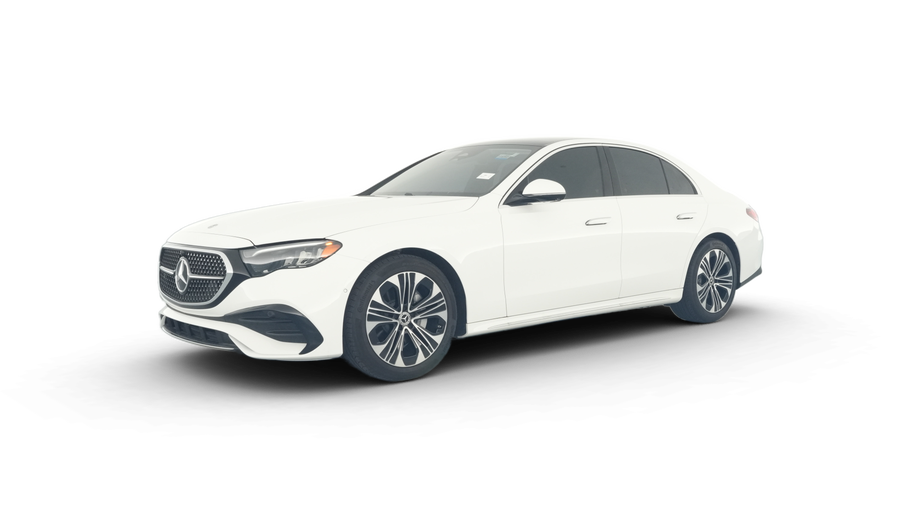
The Mercedes-Benz E-Class is a midsize luxury car family known for quiet comfort, modern cabin technology, and polished performance. Over its history, it has included sedans, wagons, coupes, and convertibles, with the sedan filling the space below the flagship S-Class.
Across generations, the E-Class has balanced traditional Mercedes comfort with steadily advancing safety and cabin technology. It has remained more polished than flashy, even as its styling has become more athletic. Wagons have added family-friendly utility, while AMG versions have given the same basic formula a much stronger performance edge.
Strengths
- The ride and cabin are built around quiet, everyday comfort rather than showy luxury.
- Safety and driver-assistance technology has been a recurring priority across multiple generations.
- The lineup covers a wide performance range, from the everyday E 350 to far more powerful AMG versions.
- The cabin technology has evolved substantially, with recent models centered on large digital displays and personalized infotainment.
- The wagon adds useful carrying space while keeping the comfort and polish that define the E-Class.
Who it's for
The E-Class fits someone who wants a refined daily driver with a quiet, comfortable cabin and plenty of technology, but does not need the size or status of an S-Class. Older coupes and convertibles suit buyers who value style and open-air driving, while the wagon works well for someone who wants more carrying space without moving to a conventional SUV.
Mercedes-Benz E-Class lineup
Pick the E 350 for the core E-Class experience with the lineup’s less powerful engine, and look for an E 350 4MATIC when all-wheel drive matters. In recent years, the E 450 has been the step-up choice for stronger six-cylinder performance without moving into the AMG branch. AMG E 53 and E 63 models are the performance-focused versions, with much more emphasis on speed and handling than the mainstream trims. The All-Terrain wagon takes a different path, pairing E-Class comfort with extra utility and light off-pavement ability.
Mercedes-Benz E-Class generations
From 2009 to 2026, the E-Class spans four generations. The current 6th Generation — W214/X214 arrived for 2024, following the 5th Generation — W213/S213/C238/A238 (2017–2023).
6th Generation — W214/X214 (2024–Present)
This generation brought fresh styling, hybrid-assisted four- and six-cylinder engines, and a much more digital cabin. It covers the W214 sedan and the higher-riding X214 All-Terrain wagon in the U.S.
1 In Stock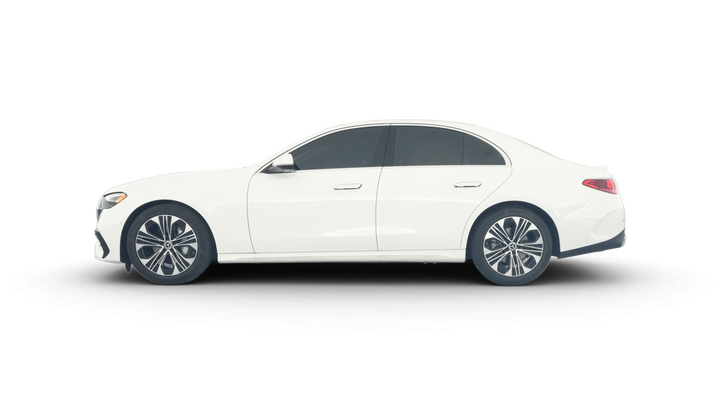
2026
A fingerprint scanner becomes standard for signing in to infotainment profiles. The rest of the lineup carries over.
2025Trim changes
A rear-wheel-drive E 350 sedan and the AMG E 53 Hybrid sedan join the lineup. A front center airbag becomes standard across the range.
2024New generation
The redesigned sedan and All-Terrain wagon arrive with fresh styling, hybrid-assisted engines, and a more digital interior.
5th Generation — W213/S213/C238/A238 (2017–2023)
The redesign reached the sedan and wagon for 2017, followed by the coupe and cabriolet for 2018. This generation brought a newer cabin and more advanced safety technology, then gained a broad styling and technology refresh for 2021.
87 In Stock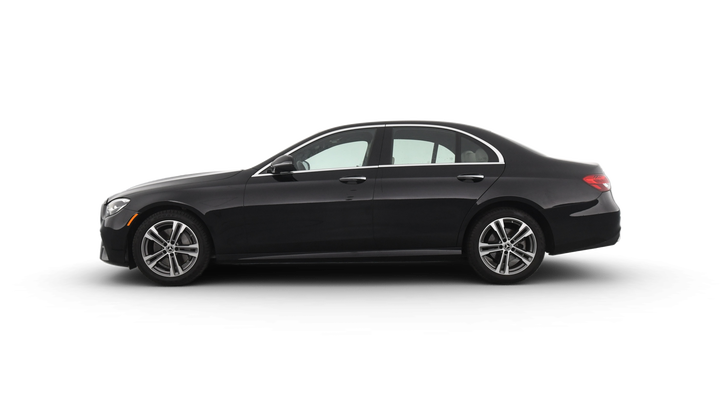
2023
The sedan, wagon, coupe, and cabriolet largely carry over. This is the final year for the coupe and cabriolet.
2022
Automatic high-beam headlights become standard. Engines, body styles, and the overall lineup remain largely unchanged.
2021Mid-cycle update
The full family gets refreshed styling, twin 12.3-inch displays, a newer touchscreen system, and revised driver-assistance technology. The wagon becomes the All-Terrain, and the E 350e plug-in hybrid joins the U.S. lineup.
2020Trim changes
The base E 300 sedan becomes the E 350 and gets a stronger turbo four-cylinder engine. Blind-spot monitoring and keyless entry become standard.
2019Trim changes
The V6 E 400 models become more powerful E 450 models, and the AMG E 53 mild-hybrid models join the lineup. A redesigned steering wheel also arrives.
2018New generation
The coupe moves to the newer E-Class design, and the new cabriolet completes the redesigned four-body-style family.
2017New generation
The sedan and wagon are redesigned with a new cabin, fresh engines, and more advanced safety technology. The coupe and cabriolet remain on the older design for one final year.
4th Generation — W212/S212/C207/A207 (2010–2016)
This generation began with a redesigned sedan and a new E-Class coupe that replaced the CLK. The wagon and cabriolet followed for 2011, and a substantial 2014 refresh reworked the styling and expanded the safety technology.
86 In Stock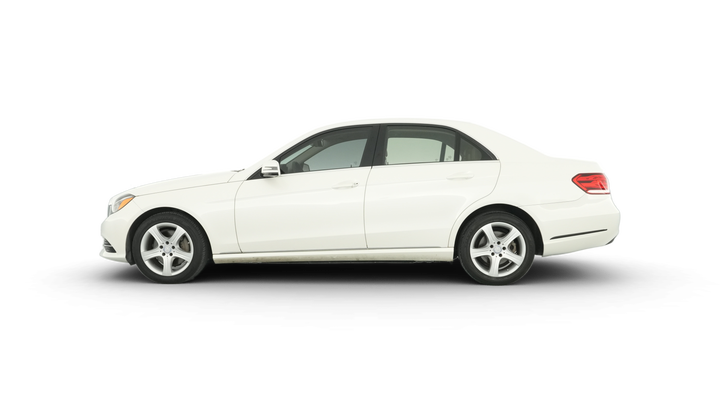
2016Trim changes
A revised infotainment unit and a simpler equipment structure arrive. The engines, transmissions, chassis, and styling remain largely unchanged.
2015Trim changes
New E 400 models bring a twin-turbo V6 to the sedan, coupe, and cabriolet range, replacing several previous E 350 and E 550 versions.
2014Mid-cycle update
The full range gets substantially revised front and rear styling, wider LED lighting, and a larger standard safety suite. The AMG E 63 also gains standard performance all-wheel drive, and the S-Model joins the lineup.
2013Trim changes
The E 400 Hybrid sedan joins the lineup, and the E 350 Coupe gains all-wheel drive. The rest of the range largely carries over.
2012
Most gasoline models get new engines and updated transmissions. The E 63 AMG Wagon returns to the U.S. lineup.
2011Trim changes
The new cabriolet joins the family, and the wagon returns to the U.S. The E 350 BlueTEC diesel also expands to all 50 states.
2010New generation
The sedan is fully redesigned, and a new E-Class coupe replaces the CLK. The new family also brings added standard safety technology.
3rd Generation — W211/S211 (2003–2009)
This sedan-and-wagon generation came before the W212 redesign. The 2009 model year is its final U.S. year.
0 In Stock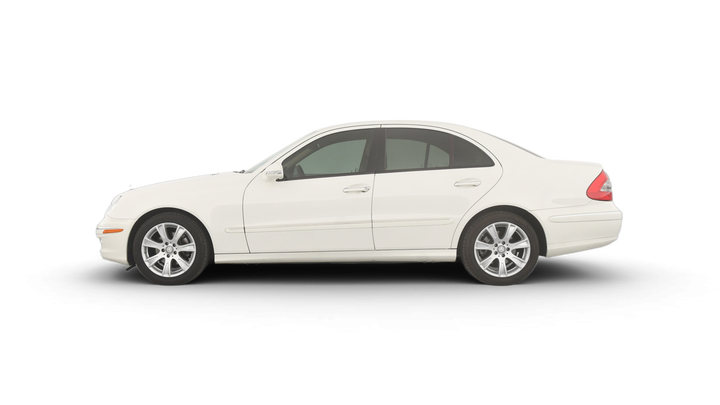
2009
The standard infotainment and audio hardware is updated. The rest of the range changes little before the 2010 sedan redesign.
What's new by year
See what changed in a specific model year of the Mercedes-Benz E-Class.
2026 Mercedes-Benz E-Class2025 Mercedes-Benz E-Class2024 Mercedes-Benz E-Class2023 Mercedes-Benz E-Class2022 Mercedes-Benz E-Class2021 Mercedes-Benz E-Class2020 Mercedes-Benz E-Class2019 Mercedes-Benz E-Class2018 Mercedes-Benz E-Class2017 Mercedes-Benz E-Class2016 Mercedes-Benz E-Class2015 Mercedes-Benz E-Class2014 Mercedes-Benz E-Class2013 Mercedes-Benz E-Class2012 Mercedes-Benz E-Class2011 Mercedes-Benz E-Class2010 Mercedes-Benz E-Class2009 Mercedes-Benz E-Class
Frequently asked questions
Is the Mercedes-Benz E-Class more comfort-focused or sporty?
It is mainly comfort-focused, with a quiet cabin, a polished ride, and smooth power. The styling has become more athletic, but the regular E-Class favors relaxed everyday driving. AMG versions are the performance-focused exceptions.
Is the Mercedes-Benz E-Class good for long highway drives?
Yes. Long-distance comfort is one of the E-Class’s core strengths. Its quiet ride, supportive power seats, smooth engines, and driver-assistance features suit extended trips, though exact equipment varies by model year and trim.
Does the Mercedes-Benz E-Class come as a wagon, coupe, or convertible?
Yes, depending on the year. The current range consists of a sedan and All-Terrain wagon. Earlier E-Class families also included coupes and convertibles, but those two-door versions ended after 2023 and their role shifted to the Mercedes-Benz CLE.
Is the Mercedes-Benz E-Class a hybrid?
Some versions use hybrid technology. Current mainstream models have mild-hybrid assistance, which supports the gas engine rather than providing long electric-only driving. Earlier choices included the E 400 Hybrid, and the plug-in E 350e joined the U.S. range for 2021.
Does the Mercedes-Benz E-Class have all-wheel drive?
Yes. Mercedes calls its all-wheel-drive system 4MATIC. Recent sedans include rear-wheel-drive and 4MATIC versions of the E 350, while the six-cylinder E 450 uses 4MATIC. Many older gas, diesel, and AMG trims also carried the 4MATIC badge.
Who is the E-Class sedan better for, and who should consider the wagon?
The sedan suits drivers who want a traditional midsize luxury car with a quiet ride and polished cabin. The All-Terrain wagon fits buyers who need more cargo usefulness and light off-pavement ability but prefer a wagon to an SUV.
Is the E-Class a sensible alternative to an S-Class?
Yes. The E-Class is aimed at buyers who want classic Mercedes comfort, technology, and refinement without moving up to the larger flagship role of the S-Class. It is the more everyday-focused midsize luxury car in that comparison.
How do the main recent Mercedes-Benz E-Class generations line up?
The W212 sedan arrived for 2010, the W213 sedan and wagon followed for 2017, and the current W214 generation began in the U.S. for 2024. Coupe and convertible changeovers followed different timing, so body style matters when comparing generations.
Mercedes-Benz E-Class Reviews
What owners are saying about the Mercedes-Benz E-Class.
4.2
Mercedes-Benz E-Class
(5,435 reviews)
“I owned this same vehicle from 2004 (new) to 2015. 90,000 miles and many hours. It was the best vehicle I have ever owned.”
“If you want quality and reliability, along with classic lines; then this is the car for you.”
“solid and dependable but somewhat dated technology. Expensive to maintain but durable.”
“The performance of the vehicle as a driving machine is spectacular (AMG engine, handling, and so forth, a true delight). However I continue to be disappointed in user interface to vehicle system and the navigation system, and MBRACE is essentially useless. My 2013 Audi and 2009 Porsche vehicles offer a significantly more refined user interface, and much more control over vehicle systems.”
“Don't do it. Have had it less than a month and the engine failed twice (just stopped dead) and check engine light on but MB mechanics can't find problem. Run flat tire has a defect in the side wall. Trunk hinge broke after opening the trunk exactly three times. Lemon of a car.”