Mercedes-Benz E-Class Trims Explained

Last updated August 4, 2026

Mercedes-Benz E-Class

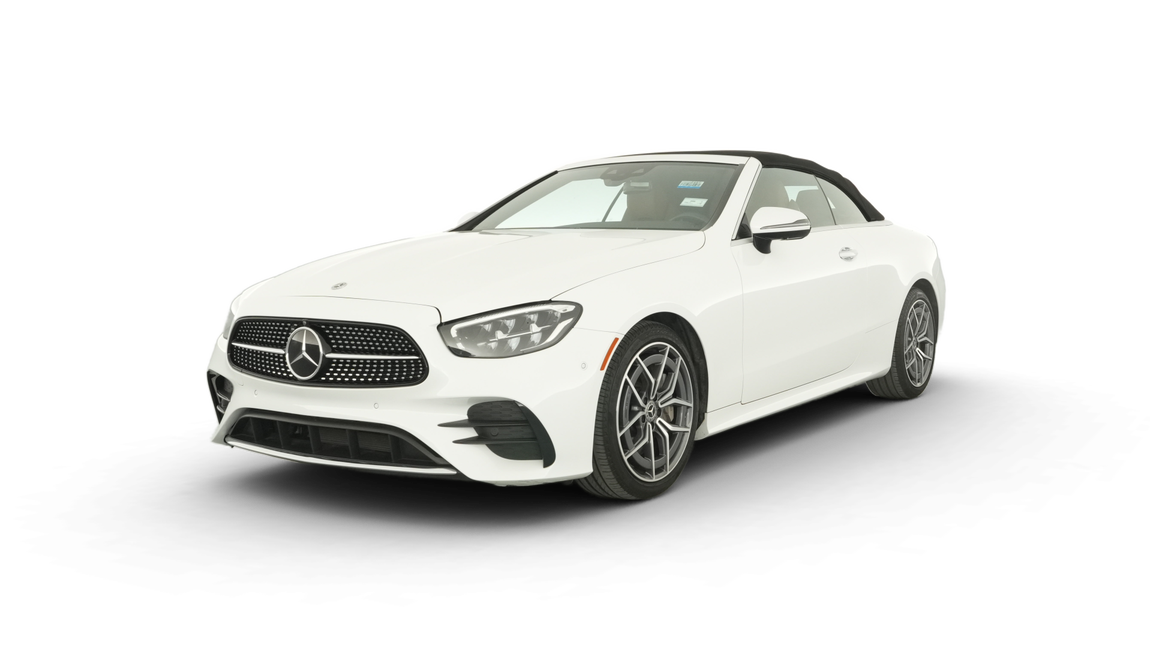
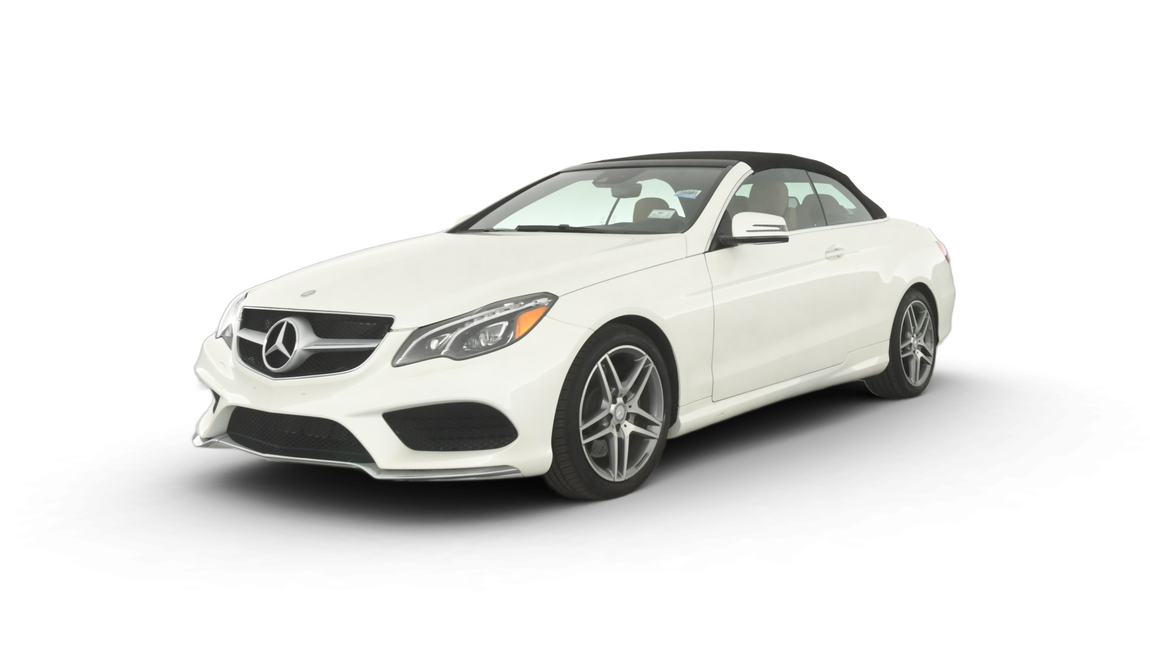
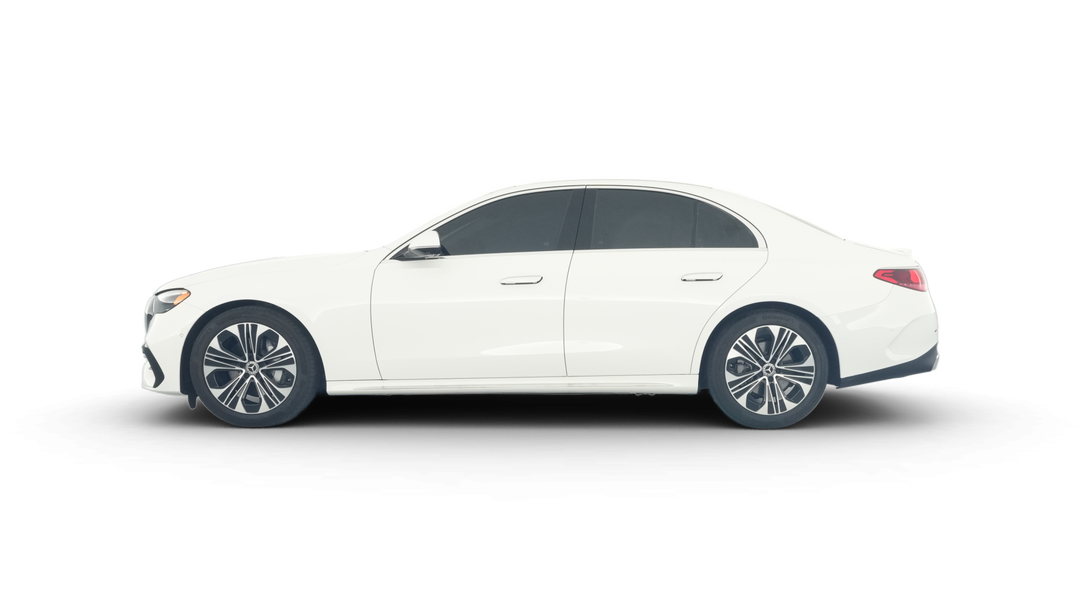
The E 300, E 300 4MATIC, E 350, and E 350 4MATIC are the core E-Class sedans, centered on comfort, technology, and a choice of rear- or all-wheel drive. The E 250 BlueTEC, E 250 BlueTEC 4MATIC, E 320 BLUETEC, and E 350 BlueTEC are the long-distance diesel branch, while the short-lived E 400 Hybrid pairs a V6 with electric assistance. The E 400, E 400 4MATIC, E 450, and E 450 4MATIC form the smoother six-cylinder step-up and span several grand-touring body styles. The E 550 and E 550 4MATIC add non-AMG V8 power. The E 63 AMG, E 63 AMG 4MATIC, and E 63 AMG 4MATIC S-Model are the full performance branch, with AMG-tuned engines, transmissions, suspension, and brakes.

What each trim is known for

Mercedes-Benz E-Class Core Model

Core Model

E 300E 300 4MATICE 350E 350 4MATIC

The Core Model trim level — E 300, E 300 4MATIC, E 350, and E 350 4MATIC — is the everyday E-Class formula, built around a quiet ride, an elegant cabin, and useful technology rather than overt performance.

Best for: Drivers who want the classic E-Class luxury-sedan experience, with rear-wheel drive or extra all-weather traction.


Highlights

  • Comfort-focused midsize luxury sedan
  • Rear-wheel drive on unbadged versions and all-wheel drive on 4MATIC models
  • Turbo four-cylinder power in the E 300 and newer E 350 models
  • Modern examples add mild-hybrid power and more advanced cabin technology
119 in stock
Mercedes-Benz E-Class Diesel

Diesel

E 250 BlueTECE 250 BlueTEC 4MATICE 320 BLUETECE 350 BlueTEC

The Diesel trim level — E 250 BlueTEC, E 250 BlueTEC 4MATIC, E 320 BLUETEC, and E 350 BlueTEC — is the long-range E-Class, known for fuel-saving diesel power and strong pulling force at everyday speeds.

Best for: High-mileage and highway drivers who value relaxed response, long range, and E-Class comfort.


Highlights

  • Turbo-diesel four-cylinder or V6, depending on model and year
  • Strong low-speed pulling power
  • 7-speed automatic transmission
  • Rear-wheel drive or 4MATIC all-wheel drive, depending on badge

Changes the core car’s gas-powered character to a torque-rich diesel setup focused on long-distance efficiency.

3 in stock
Mercedes-Benz E-Class Hybrid

Hybrid

E 400 Hybrid

The Hybrid trim level — the E 400 Hybrid — is the efficiency-minded E-Class that uses electric assistance while retaining smooth V6 power and a traditional luxury cabin.

Best for: Drivers who want a fuel-saving alternative to a regular gas V6 without moving to diesel power.


Highlights

  • 3.5-liter V6 with an electric motor
  • Rear-wheel drive
  • 7-speed automatic transmission with shift paddles
  • Power sunroof and 14-way power front seats with memory

Trades diesel power for a V6 hybrid system, adding electric assistance and a more conventional gas-engine feel.

0 in stock
Mercedes-Benz E-Class Premium Features

Premium Features

E 400E 400 4MATICE 450E 450 4MATIC

The Premium Features trim level — E 400, E 400 4MATIC, E 450, and E 450 4MATIC — is the smoother, stronger six-cylinder side of the non-AMG E-Class, with a grand-touring character and richer cabin equipment.

Best for: Drivers who want more effortless power and a more premium feel without moving to a V8 or a full AMG model.


Highlights

  • Turbocharged six-cylinder power
  • Rear-wheel drive or 4MATIC all-wheel drive, depending on badge and year
  • Sedan, wagon, coupe, and cabriolet body styles represented across the level
  • Recent E 450 models add mild-hybrid assistance and a more advanced digital cabin

Broadens the formula beyond the short-lived rear-drive hybrid with stronger six-cylinder grand-touring models and 4MATIC variants.

38 in stock
Mercedes-Benz E-Class Top Tier

Top Tier

E 550E 550 4MATIC

The Top Tier trim level — E 550 and E 550 4MATIC — is the discreet V8-powered E-Class, delivering effortless speed and upscale comfort without the harder-edged AMG personality.

Best for: Drivers who want the power and sound of a twin-turbo V8 in a quieter, more understated luxury car.


Highlights

  • Twin-turbo V8 power
  • Rear-wheel drive or 4MATIC all-wheel drive, depending on model
  • Leather upholstery
  • Heated power front seats with memory

Adds twin-turbo V8 power and a richer flagship character over the six-cylinder E 400 and E 450 models.

11 in stock
Mercedes-Benz E-Class Performance

Performance

E 63 AMGE 63 AMG 4MATICE 63 AMG 4MATIC S-Model

The Performance trim level — E 63 AMG, E 63 AMG 4MATIC, and E 63 AMG 4MATIC S-Model — is the full AMG E-Class, combining hand-built V8 power and serious handling hardware with sedan or wagon usefulness.

Best for: Enthusiasts who want sports-car pace and response in an E-Class that can still handle daily driving and long trips.


Highlights

  • Handcrafted twin-turbo AMG V8
  • Fast-shifting AMG multi-clutch transmission
  • AMG-tuned suspension and stronger brakes
  • Performance all-wheel drive on 4MATIC versions; the S-Model adds a limited-slip rear differential

Adds the complete AMG performance package: a hand-built engine, faster transmission, sharper suspension, stronger brakes, and more specialized traction hardware.

3 in stock

Trim comparison

FeatureDieselHybridTop TierCore ModelPerformancePremium Features
Includes
E 250 BlueTEC, E 250 BlueTEC 4MATIC, E 320 BLUETEC, E 350 BlueTEC3 in stock
E 400 Hybrid0 in stock
E 550, E 550 4MATIC11 in stock
E 300, E 300 4MATIC, E 350, E 350 4MATIC119 in stock
E 63 AMG, E 63 AMG 4MATIC, E 63 AMG 4MATIC S-Model3 in stock
E 400, E 400 4MATIC, E 450, E 450 4MATIC38 in stock
Powertrain identityTurbo-diesel four-cylinder or V63.5L V6 plus electric motorTwin-turbo V8Gas four-cylinder; turbocharged on cited modelsHandcrafted twin-turbo AMG V8Turbocharged six-cylinder
Driven wheelsRWD or 4MATIC AWDRWDRWD or 4MATIC AWDRWD or 4MATIC AWDRWD or AMG 4MATIC AWDRWD or 4MATIC AWD
Electrified assistanceV6 hybrid systemMild hybrid on recent modelsMild hybrid on recent E 450 models
Body-style focusSedanSedanSedan, coupe, or cabriolet by modelSedanSedan or wagonSedan, wagon, coupe, or cabriolet by model and year
Defining performance equipmentComfort-focused long-distance setupComfort-focused hybrid setupV8 power; cited 4MATIC sedan has sport suspensionComfort-first; recent models have sport-styled bodyworkAMG transmission, suspension, and brakes; S-Model adds limited-slip differentialSmooth grand-touring setup

Frequently asked questions

What does 4MATIC mean in an E-Class trim name?

4MATIC means the car has Mercedes-Benz all-wheel drive. It sends power to all four wheels for added traction in rain or snow. In many E-Class trim pairs, that drivetrain is the main difference rather than a major change in cabin equipment.

What’s the difference between the E 350 and E 350 4MATIC?

On newer models, the main difference is the drivetrain. The E 350 uses rear-wheel drive, while the E 350 4MATIC has all-wheel drive for added traction. Both share the four-cylinder turbo engine with mild-hybrid assistance and the same core cabin technology.

What does the E 450 4MATIC add over the E 350 4MATIC?

In recent years, the E 450 4MATIC’s main upgrade is its smoother, stronger turbocharged inline-six with mild-hybrid assistance. Both have all-wheel drive and similar luxury technology, so the E 450 is mainly the choice for more effortless acceleration.

Does a recent E 350 feel like a basic trim?

No. On newer models, the E 350 still has a panorama roof, sport-styled exterior trim, a modern infotainment system with user profiles, a driver camera, and navigation that overlays directions on a live camera view.

What’s the difference between an E 300 and an E 350?

The badge depends heavily on the era. On fifth-generation sedans, the E 300 was the four-cylinder entry model before it became the stronger E 350 for 2020. Older E 350 models may instead use a V6, while current E 350 sedans use a turbo four with mild-hybrid assistance.

What’s the difference between an E 400 and an E 450?

In the late fifth-generation lineup, the E 450 replaced the E 400 as the stronger non-AMG six-cylinder model. Early E 450 versions used a more powerful twin-turbo V6, while later versions moved to a turbo inline-six with mild-hybrid assistance.

Is the E 400 the same as the E 400 Hybrid?

No. The regular E 400 used a twin-turbo V6 and was sold in several body styles. The earlier E 400 Hybrid was a rear-wheel-drive sedan that paired a 3.5-liter V6 with an electric motor. The shared number does not mean they have the same powertrain.

What’s the difference between the E 250 BlueTEC and E 250 BlueTEC 4MATIC?

The drivetrain is the defining difference. The E 250 BlueTEC sends power to the rear wheels, while the 4MATIC version has all-wheel drive. Both use the same 195-hp twin-turbo diesel four-cylinder, seven-speed automatic, and core comfort and safety equipment.

How does the E 250 BlueTEC differ from the E 350 BlueTEC?

They represent different parts of the E-Class diesel era. The E 250 BlueTEC uses a 195-hp 2.1-liter twin-turbo four-cylinder with 369 lb-ft of torque. The E 350 BlueTEC uses a 3.0-liter diesel V6 with 400 lb-ft for stronger, more effortless pulling power.

What’s the difference between the E 400 and E 550 two-door models?

In the era when both were sold, the E 400 coupe or convertible used a twin-turbo V6 and emphasized smooth grand-touring comfort. The E 550 stepped up to a twin-turbo V8 and rear-wheel drive, making it the strongest regular two-door below AMG.

How does an E 550 differ from an E 63 AMG?

The E 550 is the quieter, less aggressive V8 luxury model. The E 63 AMG adds a hand-built twin-turbo V8, quicker-shifting transmission, stronger brakes, firmer adjustable suspension, and AMG-specific bodywork for much more performance-focused driving.

What’s the difference among the E 63 AMG, E 63 AMG 4MATIC, and S-Model?

In that performance era, the regular E 63 AMG began as the rear-wheel-drive version. The 4MATIC model added performance all-wheel drive. The S-Model raised output to 577 hp and added a limited-slip rear differential, stronger chassis hardware, and more supportive seating.

Which E-Class trim makes the most sense for frequent snow?

A 4MATIC trim is the straightforward fit because it has all-wheel drive. Among newer sedans, the E 350 4MATIC keeps the core four-cylinder setup, while the E 450 4MATIC adds smoother six-cylinder power. Older gas and diesel ranges also included 4MATIC versions.

Which older E-Class trim suits frequent long highway trips?

A BlueTEC diesel is the mileage-focused choice from the older lineup. The E 250 BlueTEC emphasizes low fuel use and strong low-speed pulling power, while the E 350 BlueTEC uses a smoother diesel V6 with 400 lb-ft of torque. A 4MATIC diesel adds all-weather traction.