
“For my purposes, carrying dogs and gear, this is a perfect vehicle. It is comfortable on long road trips and makes decent gas mileage, especially for a van.”
Ford Transit Connect: Trims, Generations & Buyer's Guide
Last updated August 4, 2026
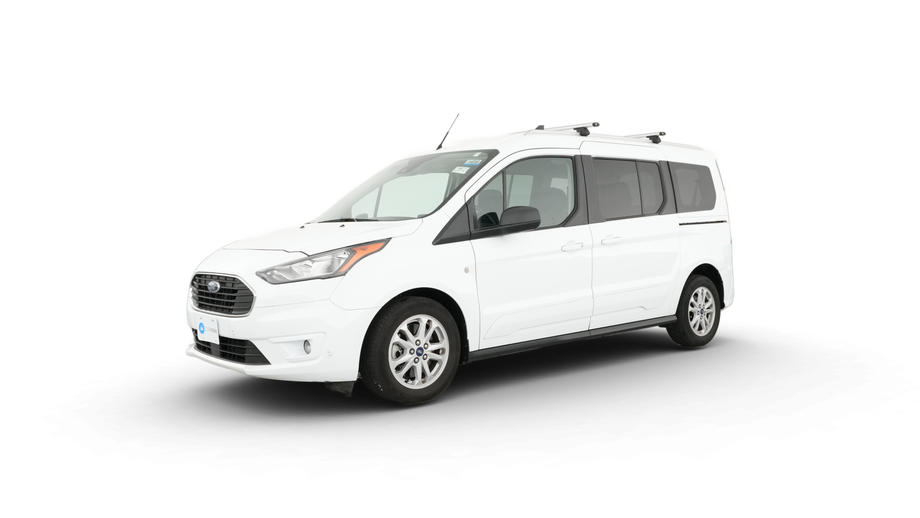
The Ford Transit Connect is a compact, front-wheel-drive commercial van sold in cargo and passenger forms. It is known for combining a city-friendly footprint with flexible room for people or gear.
The Transit Connect has always been the smaller, easier-to-handle alternative to a full-size van. Cargo versions focus on deliveries and trade work, while passenger versions turn the same boxy shape into a practical people-mover. Across both U.S. generations, its defining traits were a low load floor, sliding side doors, and flexible interior space. The 2023 model was its final U.S. model year.
Strengths
- Its compact footprint makes it easier to maneuver and park in crowded areas than a full-size van.
- The low load floor and sliding side doors make loading people, packages, or work gear more convenient.
- Cargo and passenger layouts give it useful flexibility for either business or family duty.
- In 2023, its layouts ranged from two seats to seven, depending on whether it was set up for cargo or passengers.
- Models from the 2019 refresh onward include standard automatic emergency braking.
Who it's for
It suits small businesses, delivery drivers, and tradespeople who need useful cargo room without the bulk of a full-size work van. Passenger versions also fit families or groups who value easy entry and flexible seating more than conventional crossover styling.
Ford Transit Connect lineup
Pick the XL when straightforward work-van utility matters most. The XLT is the middle ground for buyers who want more everyday convenience while keeping the Transit Connect's practical focus. Titanium sits at the top of the passenger-wagon range and is the better fit when carrying people takes priority over basic commercial use. Equipment changed over time, so the trim badge alone does not tell the whole story on a used example.
Ford Transit Connect generations
From 2010 to 2023, the Transit Connect spans two generations. The current 2nd Generation arrived for 2014, following the 1st U.S. Generation (2010–2013).
2nd Generation (2014–2023)
A full redesign broadened the Transit Connect into a more complete cargo-van and passenger-wagon lineup, with short- and long-wheelbase bodies, new engines, and a six-speed automatic. A substantial 2019 refresh brought revised front styling, redesigned front seats, newer powertrains with an eight-speed automatic, and standard automatic emergency braking.
12 In Stock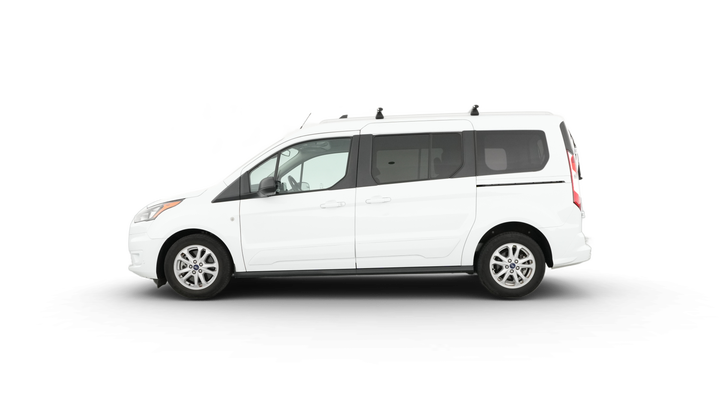
2023
Largely unchanged for its final U.S. model year.
2022
Minor options and accessories included dark-finished wagon wheels, fixed-glass choices for cargo vans, and roof-rack crossbars.
2021
A quiet carryover year with only minor ordering changes.
2020
Automatic headlights and rain-sensing wipers became standard across the lineup. Upper trims gained more standard safety and convenience equipment.
2019Mid-cycle update
Refreshed front styling, redesigned front seats, new mainstream powertrains, an eight-speed automatic, and standard automatic emergency braking.
2018
Mostly unchanged and the final model year before the 2019 refresh.
2017
The optional turbocharged 1.6-liter engine was dropped, leaving the 2.5-liter four-cylinder and six-speed automatic across the lineup. Passenger wagons gained more standard equipment.
2016
Targeted updates added flex-fuel capability to some cargo vans and expanded access to blind-spot monitoring and other equipment.
2015
Carryover year with only minor equipment revisions.
2014New generation
Full redesign with short- and long-wheelbase bodies, new powertrains, and a broader passenger-wagon lineup with third-row seating.
1st U.S. Generation (2010–2013)
The original U.S.-market Transit Connect was a compact, front-wheel-drive alternative to a full-size van. Cargo and passenger versions shared a 2.0-liter four-cylinder engine and four-speed automatic.
0 In Stock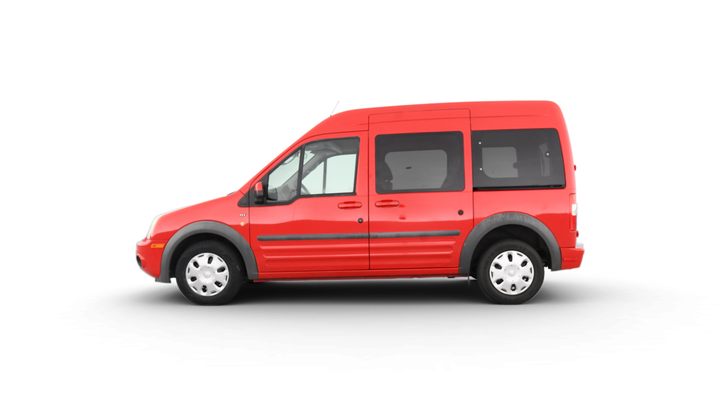
2013
Carryover year and the final model year before the 2014 redesign.
2012
Stability control with rollover mitigation became standard across the lineup.
2011Trim changes
The XL passenger wagon left the lineup, while the XLT Premium Wagon joined for the first time.
2010New generation
First U.S. model year, launched with XL and XLT trims in cargo-van and passenger-wagon forms.
What's new by year
See what changed in a specific model year of the Ford Transit Connect.
2023 Ford Transit Connect2022 Ford Transit Connect2021 Ford Transit Connect2020 Ford Transit Connect2019 Ford Transit Connect2018 Ford Transit Connect2017 Ford Transit Connect2016 Ford Transit Connect2015 Ford Transit Connect2014 Ford Transit Connect2013 Ford Transit Connect2012 Ford Transit Connect2011 Ford Transit Connect2010 Ford Transit Connect
Frequently asked questions
Is the Ford Transit Connect a cargo van or a passenger van?
It was sold as both. Cargo versions are compact work vans for deliveries and trades, while passenger wagons add rear seating and sliding-door access for family or shuttle duty.
Is the Transit Connect easier to maneuver than a full-size van?
Yes. Its main advantage is a smaller, city-friendly footprint that is easier to park and place in tight areas than a full-size van, while retaining a low load floor and useful room for people or gear.
How many people does a Ford Transit Connect seat?
It depends on the body and model year. Cargo vans are mainly two-seat work vehicles, while passenger wagons seat as many as seven. Check the individual van because seating layouts vary.
Does the Ford Transit Connect come as a hybrid?
No hybrid version was offered in the U.S. lineup covered here. Most use gasoline four-cylinder engines; a 1.5-liter diesel joined the refreshed lineup for a limited period beginning in 2019.
Does the Ford Transit Connect have AWD?
No. U.S.-market Transit Connect vans use front-wheel drive rather than AWD. That suits paved-road delivery, commuting, and shuttle use, but shoppers needing four driven wheels should look elsewhere.
How many generations of the Ford Transit Connect were sold in the U.S.?
There were two U.S. generations. The first ran from 2010 through 2013. A fully redesigned second generation arrived for 2014, received a substantial refresh for 2019, and ended its U.S. run after 2023.
Can a Ford Transit Connect tow a trailer?
Yes, but it is meant for light-duty towing rather than heavy trailers. The latest lineup has a maximum tow rating of 2,000 pounds. Confirm the rating and required equipment on the specific used van.
Ford Transit Connect Reviews
What owners are saying about the Ford Transit Connect.
4.0
Ford Transit Connect
(705 reviews)
“I am really satisfied with overall quality and value of my Transit Connect Wagon”
“This vehicle is awesome. I have been approached by many people asking about this vehicle and if I like it. I Love it.”
“love alll the windows in a work mini van love the mileage and the capacity of the vehicle”
“This vehicle was purchased as a dog vehicle as I travel a lot to competitions. Lots of room to accommodate different size crates, and all my gear.”
“I'd like the passenger seat to be adjustable (down) the same way the driver's is.”
Sources
- ford.com — Trucks / Transit Connect Passenger Van Wagon / 2023
- media.ford.com — 2021 / Transit Connect / 2021 Transit Connect Whats New
- media.ford.com — 2021 / Transit Connect / 21TransitConnect TechSpecs
- media.ford.com — 2020 / Transit Connect Van / 2020 Transit Connect OrderGuide
- media.ford.com — 03 / 06 / New Ford Transit Connect Cargo Van Is Ready For Work
- media.ford.com — 2019 / Transit Connect Van / 19 Transit Connect Passenger Van
- media.ford.com — 2017 / Transit Connect / 2017 Transit Connect Product Sheet
- media.ford.com — 06 / 09 / Ford Transit Transit Connect And Transit Connect Wagon Even Sma
- media.ford.com — 05 / 02 / 2014 TransitConnectWagon SWB
- media.ford.com — 05 / 02 / 2014 TransitConnectWagon LWB