
2010 Ford Transit Connect: What's New, Specs & Features
Last updated August 4, 2026
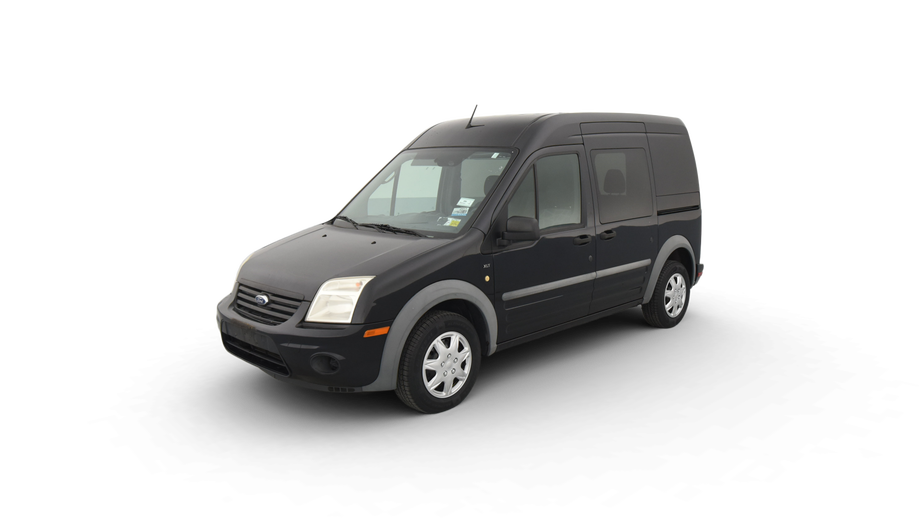
The 2010 Ford Transit Connect was all-new to the U.S., making this the compact van’s first American model year. Its arrival gave small-business buyers a smaller, city-friendly alternative to a full-size work van.
About the 2010 Ford Transit Connect
First-generation Transit Connect, first U.S. model year for North America.
Ford positioned the Transit Connect as a purpose-built small business vehicle that fit between a compact SUV/minivan and a full-size commercial van. Its selling points were city-friendly size, a tall cargo area, a low load floor, and lower operating costs than larger vans. Instead of asking owners to strip seats out of a passenger vehicle, Ford sold the Transit Connect as a ready-made work tool, with wagon versions adding extra passenger room for crews using the same compact footprint.
The XL is the straightforward work version, with a low load floor, a tall cargo area, air conditioning and simple manual controls. The XLT keeps the same compact layout but adds more day-to-day convenience, including power windows and locks, heated power mirrors, cruise control and remote keyless entry. Both trims were sold in cargo-van and wagon body styles.
What changed, by category
2010 Ford Transit Connect specs and features by trim
| Feature | ||
|---|---|---|
| Engine | 4-Cyl, 2.0 Liter | 4-Cyl, 2.0 Liter |
| Transmission | Automatic, 4-Spd w/Overdrive | Automatic, 4-Spd w/Overdrive |
| Drivetrain | FWD | FWD |
| Fuel Type | Gas | Gas |
| MPG City | 22 mpg | 22 mpg |
| MPG Highway | 25 mpg | 25 mpg |
| Horsepower | 136 hp | 136 hp |
| Torque | 128 lb-ft | 128 lb-ft |
| Max Towing | 2000–3500 lb | 2000–3500 lb |
| Trunk/Cargo | 135.3 cu-ft | 135.3 cu-ft |
| Rear Legroom | 38.5 in | 38.5 in |
| Seats | 2–4 | 2–5 |
| Doors | 4 | 4 |
| Cruise Control | ||
| Rear Parking Sensors | ||
| Fog Lights | ||
| Heated Mirrors | ||
| Power Mirrors | ||
| Navigation System | ||
| Folding Rear Seat | ||
| Power Locks | ||
| Power Windows | ||
| Remote Start | ||
| Remote Keyless Entry | ||
Frequently asked questions
What was new about the 2010 Ford Transit Connect?
The 2010 Transit Connect was an all-new model for the U.S. market. It arrived as a compact, front-wheel-drive van aimed at urban delivery, service work and buyers who did not need a full-size work van.
Was there a 2009 Ford Transit Connect in the U.S.?
No, 2010 was the Transit Connect’s first U.S. model year. It did not replace a 2009 U.S. Transit Connect.
What engine does the 2010 Ford Transit Connect use?
Every 2010 Ford Transit Connect uses a 2.0-liter four-cylinder engine with a 4-speed automatic transmission and front-wheel drive. There was no second engine or AWD version in the lineup.
Did the 2010 Ford Transit Connect come as both a cargo van and a wagon?
Yes, the 2010 Transit Connect was sold in cargo-van and wagon body styles. The lineup included XL and XLT trims.
What is the difference between the 2010 Transit Connect XL and XLT?
The XL is the basic, job-focused trim, while the XLT adds cabin conveniences. Notable XLT equipment includes power windows and locks, heated power mirrors, remote keyless entry, cruise control and a CD stereo.