
“Visibility is horrible due to the size of wiper blades and poor washer solvent jet setup for inclement weather. The window motors are undersized for the size of the windows. They struggle to roll up both driver and passenger windows. But that's what you get when you spend less than 40,000 for a vehicle.”
2016 Ford Transit Connect: What's New, Specs & Features
Last updated August 4, 2026
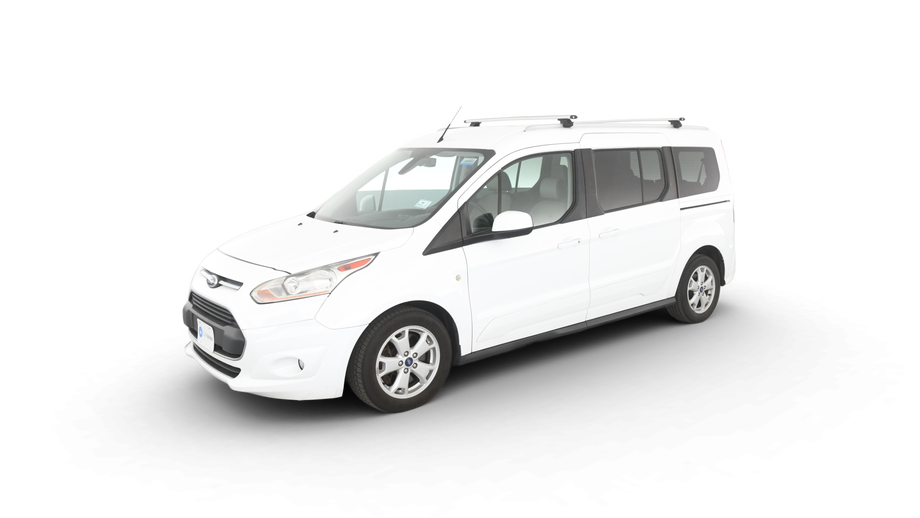
The 2016 Ford Transit Connect is mostly a carryover from 2015, not a redesign. Its main changes are targeted updates to certain engines, upper Wagon safety equipment, and Titanium seating.
About the 2016 Ford Transit Connect
2nd generation for North America (2014-2023), third model year after the 2014 redesign.
Ford positioned the Transit Connect as a compact van that could do double duty for work or family use. In cargo form, the focus was maneuverability, a low load floor, and usable space for small-business duty. In wagon form, Ford pitched it as an easier-to-drive alternative to a full minivan, with flexible seating and a tall roof that made people-and-cargo duty simple. Its core appeal was big usefulness in a smaller footprint.
The XL remains the simple, work-focused choice, while XLT adds everyday comforts such as cruise control, fog lamps, and a 4.2-inch information display. Titanium is the comfort-focused six-passenger Wagon, with heated leather-trimmed front seats, dual-zone climate control, and fold-flat second-row bucket seats.
What changed, by category
Powertrain
Some cargo vans with the 2.5-liter engine gained flex-fuel capability outside California. The turbocharged 1.6-liter EcoBoost engine also became an option on the Wagon XLT.
Safety
Blind-spot monitoring with rear cross-traffic alert became optional on XLT and Titanium Wagons.
Interior equipment
The Titanium Wagon made second-row fold-flat bucket seats standard.
2016 Ford Transit Connect specs and features by trim
| Feature | |||
|---|---|---|---|
| Engine | 4-Cyl, 2.5 Liter / 4-Cyl EcoBoost 1.6T | 4-Cyl, 2.5 Liter / 4-Cyl, EcoBoost, 1.6T | 4-Cyl, 2.5 Liter |
| Transmission | Automatic, 6-Spd w/SelectShift / Auto, 6-Spd SelectShift | Automatic, 6-Spd w/SelectShift / Auto, 6-Spd SelectShift | Auto, 6-Spd SelectShift |
| Drivetrain | FWD | FWD | FWD |
| Fuel Type | Gas | Gas | Gas |
| MPG City | 20–22 mpg | 20–22 mpg | 20 mpg |
| MPG Highway | 28–30 mpg | 28–30 mpg | 28 mpg |
| Horsepower | 169–178 hp | 169–178 hp | 169 hp |
| Torque | 171–184 lb-ft | 171–184 lb-ft | 171 lb-ft |
| Max Towing | 2000 lb | 2000 lb | 2000 lb |
| Trunk/Cargo | 103.9–104.2 cu-ft | 103.9–104.2 cu-ft | 104.2 cu-ft |
| Rear Legroom | 34.9 in | 34.9 in | 34.9 in |
| Seats | 2–7 | 2–7 | 6 |
| Doors | 4 | 4 | 4 |
| Alarm System | |||
| Automatic Headlights | |||
| Blindspot Sensors | |||
| Cruise Control | |||
| Front & Rear Parking Sensors | |||
| Parental Control System | |||
| Rain Sensing Windshield Wipers | |||
| Rear View Camera | |||
| Alloy Wheels | |||
| Fog Lights | |||
| Heated Mirrors | |||
| Panorama Moon Roof | |||
| Power Folding Exterior Mirrors | |||
| Power Mirrors | |||
| Privacy Glass | |||
| Roof Rails | |||
| Navigation System | |||
| SD Card Slot | |||
| Smartphone Interface | |||
| Video Input | |||
| Auto-Dimming Interior Mirror | |||
| Dual Power Lumbar Support Front Seats | |||
| Dual-Zone Climate Control | |||
| Folding Rear Seat | |||
| Rear Air Conditioning | |||
| Heated Front Seats | |||
| Leather Seats | |||
| Leather-Wrapped Steering Wheel | |||
| Power Driver Seat | |||
| Rear Window Shades | |||
| Remote Start | |||
Frequently asked questions
Was the 2016 Ford Transit Connect redesigned?
No. The 2016 Transit Connect remained part of the generation introduced for North America in 2014, and it received only targeted trim and equipment updates.
What is the biggest difference between the 2016 and 2015 Ford Transit Connect?
The biggest difference is a small group of trim-specific updates rather than one major overhaul. Certain cargo vans gained flex-fuel capability, Wagon XLT added a turbocharged engine option, upper Wagons added an optional blind-spot safety system, and Titanium gained standard fold-flat second-row bucket seats.
Did the 2016 Transit Connect get a new engine?
No new engine replaced the existing lineup. Instead, the turbocharged 1.6-liter EcoBoost expanded to the Wagon XLT, while some cargo vans with the 2.5-liter engine gained flex-fuel capability outside California.
Did the 2016 Transit Connect add blind-spot monitoring?
Yes, but only as an option on XLT and Titanium Wagons. The system also included rear cross-traffic alert to warn of vehicles approaching from either side while backing up.
Is the 2016 Transit Connect meaningfully different from the 2015 model?
Not for most shoppers. The basic design and broader lineup carried over, so the differences matter mainly when comparing a cargo van with flex-fuel capability, an XLT Wagon with the turbocharged engine, or an upper Wagon with the added safety and seating equipment.
2016 Ford Transit Connect Reviews
What owners are saying about the 2016 Ford Transit Connect.
4.0
2016 Ford Transit Connect
(115 reviews)
“The style and room inside are great. Easy to get cargo in back with the height of bumper”
“Fuel efficient, not too expensive, appealing, decent acceleration, easy seating entrance.”