
“2017 Nissan Leaf S is a well made and engineered Battery Electric Vehicle. Cabin noise, handling and display are above average but not luxury level. The 107 Hp motor and 30 kWh traction battery provide 120 mile range (summer), that works for me as I'm retired and tend to drive locally. I just love this whole car.”
Nissan LEAF: Trims, Generations & Buyer's Guide
Last updated August 4, 2026
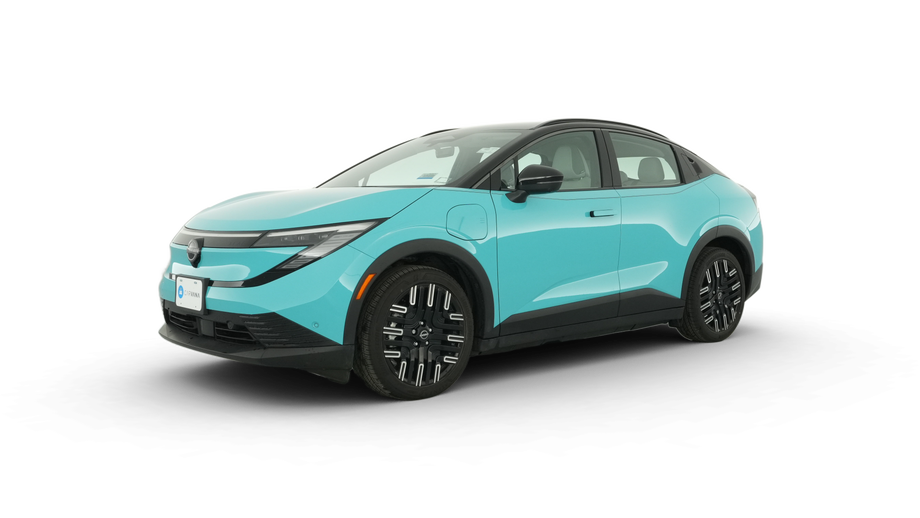
The Nissan LEAF is a compact five-seat electric car known for making everyday EV driving approachable, quiet, and easy to use. It spent its first two generations as a hatchback before becoming a subcompact crossover with its 2026 redesign.
The LEAF was one of the first battery-electric cars designed for ordinary daily use rather than as a niche experiment. Through three generations, Nissan has steadily expanded its driving range, safety technology, and charging convenience while keeping the controls friendly. Its character has remained focused on practical, low-stress electric transportation, even as the 2026 redesign shifted it from a hatchback to a small crossover.
Strengths
- Its quiet electric power and one-pedal driving make stop-and-go commuting feel simple and relaxed.
- The LEAF has kept a compact, easy-to-manage footprint throughout its history, even after becoming a small crossover for 2026.
- Later versions travel much farther than early LEAFs, and 2026 models are EPA-rated for 259 to 303 miles depending on trim.
- Safety technology became a consistent strength, with a broad driver-assistance suite standard across the lineup starting in 2020.
- The 2026 redesign uses the NACS fast-charging connection and improved battery temperature management, addressing two important charging concerns from older versions.
Who it's for
The LEAF fits commuters and small households that can charge regularly and want a quiet, compact vehicle for daily travel. Older versions make the most sense when their shorter range comfortably covers the buyer’s routine, while later PLUS models and the redesigned 2026 LEAF better suit longer drives.
Nissan LEAF lineup
The S has traditionally been the straightforward entry trim, while the SV has served shoppers wanting more comfort and technology. The SL was the upscale choice through much of the first two generations. Since 2019, the PLUS name has identified longer-range versions, making those models more useful beyond short commutes. With the 2026 redesign, the lineup became S+, SV+, and Platinum+, with Platinum+ taking the top spot for shoppers who want the most upscale version.
Nissan LEAF generations
From 2011 to 2026, the LEAF spans three generations. The current 3rd Generation arrived for 2026, following the 2nd Generation — ZE1 (2018–2025).
3rd Generation (2026–Present)
The LEAF changed from a small hatchback into an electric subcompact crossover. It also gained a 75-kWh battery, an NACS fast-charging port in place of CHAdeMO, better battery temperature control, and a dual-screen cabin.
1 In Stock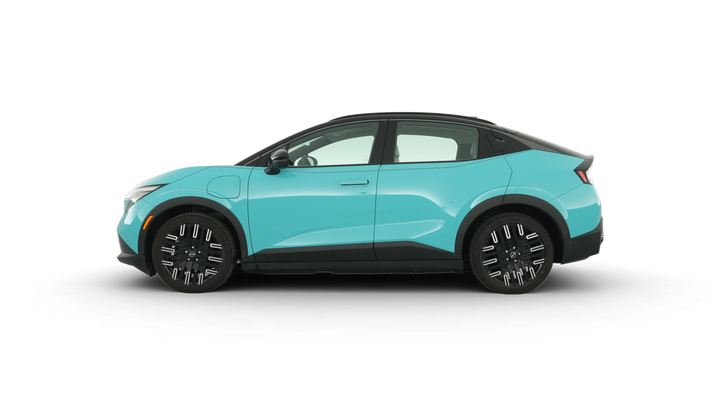
2026New generation
Full redesign into an electric subcompact crossover, with a 75-kWh battery, 214-hp front motor, NACS fast charging, and an updated dual-screen interior.
2nd Generation — ZE1 (2018–2025)
This generation kept the LEAF as an electric hatchback but brought a new body, a larger 40-kWh battery, more power, and one-pedal driving. Longer-range PLUS models followed for 2019, while later years added broader safety equipment and a lighter styling update.
42 In Stock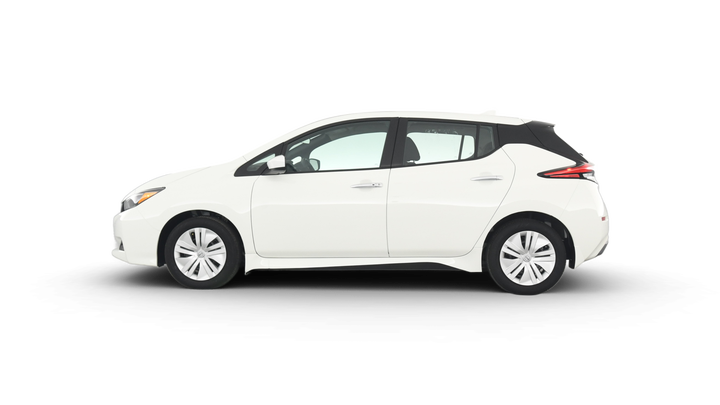
2025
The S and SV PLUS carried over with the same batteries, safety features, and infotainment system.
2024
The two-trim S and SV PLUS lineup carried over without a major equipment or technology update.
2023Trim changes
Front styling was lightly revised, and the five-trim lineup was reduced to the S and SV PLUS.
2022
DC fast-charging capability became standard on every trim, and the SV PLUS gained the former Technology Package equipment.
2021
The five-trim lineup, battery choices, and driving ranges carried over from 2020.
2020Trim changes
The non-PLUS SL left the lineup. A broader safety suite and an 8-inch touchscreen with Apple CarPlay and Android Auto became standard on every LEAF.
2019Trim changes
The S PLUS, SV PLUS, and SL PLUS joined the lineup with a 62-kWh battery, more power, faster DC charging, and up to 226 miles of EPA-rated range.
2018New generation
Full redesign with a new body and cabin, a 40-kWh battery, 147 hp, 150 miles of EPA-rated range, and standard one-pedal driving.
1st Generation — ZE0 (2011–2017)
The original LEAF was a five-seat electric hatchback built on a dedicated EV platform. It started with a 24-kWh battery, then received major usability updates for 2013 and a larger 30-kWh battery late in its life.
2 In Stock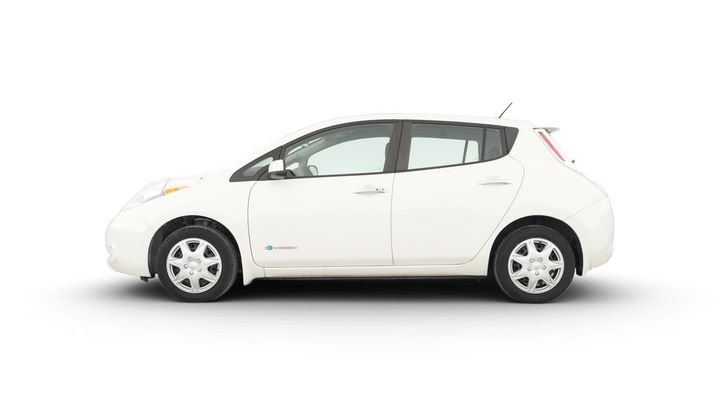
2017Trim changes
The 30-kWh battery became standard on every trim, giving the full lineup an EPA-rated 107 miles of range.
2016Trim changes
A 30-kWh battery raised range to 107 miles on the SV, SL, and late-year S-30, while the S-24 kept the smaller battery.
2015
A stronger regenerative-braking mode became standard across the lineup, with small technology and wheel updates on upper trims.
2014
A rearview camera became standard on every trim. The higher EPA range rating came from revised testing, not a new battery or motor.
2013Mid-cycle update
A major update added the S trim, improved efficiency and charging usability, and created more cargo room by relocating charging hardware.
2012
Cold-weather equipment became standard across the lineup, and the SL gained a standard DC fast-charging port.
2011New generation
The LEAF launched in the U.S. as a new five-seat electric hatchback with a dedicated EV platform, a 24-kWh battery, and an 80-kW motor.
What's new by year
See what changed in a specific model year of the Nissan LEAF.
Frequently asked questions
Is the Nissan LEAF a hybrid?
No. The Nissan LEAF is fully electric and has no gasoline engine. Every generation uses a rechargeable battery and electric motor, so it needs to be plugged in rather than fueled at a gas station.
Is the Nissan LEAF a hatchback or a crossover?
It depends on the generation. LEAF models from 2011 through 2025 are compact hatchbacks. The 2026 redesign changes the LEAF into a sleeker subcompact crossover while keeping its five-seat, all-electric layout.
How many generations of the Nissan LEAF are there?
There are three generations. The first covers 2011–2017, the second runs from 2018–2025, and the third begins with the redesigned 2026 crossover. Those breaks matter because range, charging hardware, styling, and cabin technology changed substantially.
Does the Nissan LEAF come with AWD?
The redesigned LEAF is front-wheel drive, not AWD. Its launch lineup uses a front-mounted electric motor in every trim, so shoppers who specifically need power sent to all four wheels will need to look outside that LEAF generation.
Is the Nissan LEAF only useful for short trips?
Not necessarily. Range depends heavily on the model year and battery. Earlier examples were rated around 84 or 107 miles, the second generation started at 150 miles, later PLUS models reached 226 miles, and the redesigned LEAF spans 259–303 miles.
Who is the Nissan LEAF a good fit for?
The LEAF fits commuters and small households that want quiet electric driving, easy controls, and a compact vehicle. Older short-range examples make the most sense when daily mileage is predictable, while newer long-range versions suit a wider mix of trips.
What does the LEAF's e-Pedal do?
e-Pedal lets you speed up and slow down mostly with the accelerator pedal. Lifting your foot produces strong regenerative braking and can bring the car to a stop, reducing how often you use the brake pedal. It became standard with the 2018 redesign.
Nissan LEAF Reviews
What owners are saying about the Nissan LEAF.
4.2
Nissan LEAF
(3,806 reviews)
“The Leaf is an excellent vehicle for around-town and regional driving. For longer trips, it takes a little planning, but is still very workable. It is a VERY smooth ride, it is very comfortable, and is a blast to drive. It also has great safety features.”
“It's a great car for running around town - BUT - the overall range and recharge time is NOT GOOD for anything except local driving.”
“EV is the way to go. It does take some adjusting but well worth it. Do your research before committing to go full EV.”
“Love the pick up and go of the vehicle and not having to stop for gas and less maintenance.”
“The base model is no frills, but wonderful. Does what it is supposed to do and has great acceleration compared to non-EV, fuel efficient cars. When you need to accelerate, the car picks up and goes. Good efficiency with Eco Mode on and reasonable driving. Base model is limited to 50kW charging, so 100kW and 350kW fast chargers don't provide any extra value.”
Sources
- nissanusa.com — Vehicle Brochures / 2026 / 2026 Nissan Nissan Leaf Brochure En
- nissanusa.com — Vehicle Brochures / 2025 / 2025 Nissan Nissan Leaf Brochure En
- nissanusa.com — Vehicles / Electric Cars / 2025 Leaf
- nissanusa.com — Vehicle Brochures / 2024 / 2024 Nissan Nissan Leaf Brochure En
- nissanusa.com — Electric Cars / 2025 Leaf / Features
- nissanusa.com — Electric Cars / 2025 Leaf / Specs Trims
- nissanusa.com — Vehicle Brochures / 2023 / 2023 Nissan Nissan Leaf Brochure En
- nissanusa.com — Vehicle Brochures / 2022 / 2022 Nissan Nissan Leaf Brochure En
- nissanusa.com — Vehicle Brochures / 2021 / 2021 Nissan Nissan Leaf Brochure En
- nissanusa.com — Vehicle Brochures / 2020 / 2020 Nissan Nissan Leaf Brochure En
- nissanusa.com — Vehicle Brochures / 2019 / 2019 Nissan Nissan Leaf Brochure En
- nissanusa.com — Vehicle Brochures / 2018 / 2018 Leaf Brochure En