
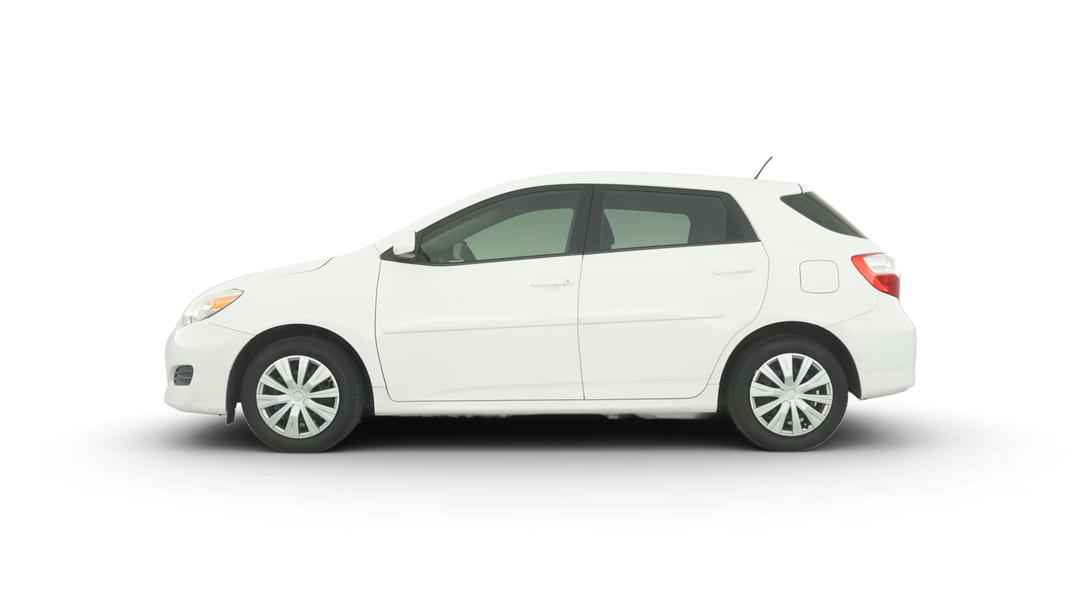
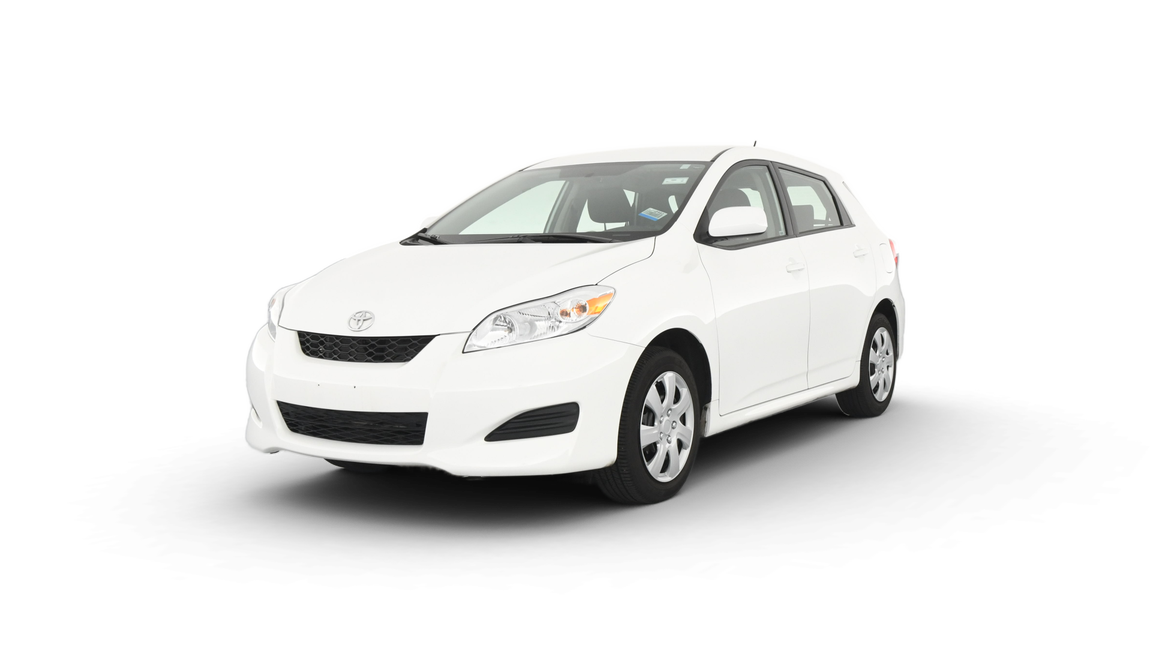
Toyota Matrix Sport, L Sport, S Sport & More

Last updated August 4, 2026

Toyota Matrix

The Toyota Matrix lineup starts with Sport, the simple, efficiency-minded hatchback with factory body accents and fog lamps. L Sport is the practical everyday step-up, while S Sport keeps the same useful hatchback shape but adds stronger power and a more athletic feel. XRS Sport is the sport-focused branch. It builds on the stronger-engine formula with distinctive wheels, added chassis hardware, a rear spoiler, and driver-focused cabin trim.

What each trim is known for

Toyota Matrix Base Model

Base Model

Sport

The Base Model trim level — sold as Sport — is the simple, practical Matrix with an efficiency-minded engine, flexible hatchback space, and factory sporty-looking accents.

Best for: Drivers who want straightforward daily transportation and useful cargo space without giving up a sharper exterior look.


Highlights

  • Efficiency-minded gasoline engine
  • Front and rear lower spoilers
  • Integrated fog lamps
  • Split-folding rear seat
0 in stock
Toyota Matrix Mid-Level

Mid-Level

L SportS Sport

The Mid-Level trim level — L Sport and S Sport — is the core practical range: L Sport favors everyday efficiency, while S Sport adds stronger power and a more athletic character.

Best for: Commuters and small families who want more everyday convenience, with a choice between the efficient L Sport character and the stronger S Sport character.


Highlights

  • L Sport's 132-hp 1.8-liter engine
  • S Sport's 158-hp 2.4-liter engine
  • Split-folding rear seat; S Sport adds a fold-flat front passenger seat
  • Later examples add USB/iPod and Bluetooth connectivity; S Sport uses a touchscreen system

Moves beyond the simpler Sport with cruise control, remote keyless entry, power windows and locks, and heated power mirrors; S Sport also adds stronger power and a fold-flat front passenger seat.

2 in stock
Toyota Matrix Sport Styling

Sport Styling

XRS Sport

The Sport Styling trim level — XRS Sport — pairs Matrix hatchback usefulness with more aggressive trim, larger alloy wheels, and added chassis hardware.

Best for: Drivers who like the Matrix's practical shape but want a more purposeful look and a more driver-focused feel.


Highlights

  • Larger alloy wheels
  • Front strut tower brace
  • Leather-trimmed steering wheel with audio controls
  • Rear spoiler

Builds on S Sport's stronger-engine formula with larger alloy wheels, a front strut tower brace, a leather-trimmed steering wheel with audio controls, and a rear spoiler.

0 in stock

Trim comparison

FeatureMid-LevelBase ModelSport Styling
Includes
L Sport, S Sport2 in stock
XRS Sport0 in stock
Member trimsL Sport and S SportSportXRS Sport
Main characterL Sport favors efficiency; S Sport favors stronger performanceSimple daily utility with sporty accentsSport-focused styling and chassis upgrades
Engine characterL Sport: 132 hp, 1.8-liter; S Sport: 158 hp, 2.4-literEfficiency-minded smaller engineLarger engine shared with S Sport
Cargo flexibilitySplit-folding rear seat; S Sport adds a fold-flat front passenger seatSplit-folding rear seatPractical hatchback layout
Exterior and chassis detailsS Sport adds sport front and rear bumpersLower spoilers and fog lampsLarger alloy wheels, front strut tower brace, and rear spoiler
Cabin and audio identityLater examples add USB/iPod and Bluetooth; S Sport has a touchscreen systemCD audio with auxiliary inputLeather-trimmed steering wheel with audio controls

Frequently asked questions

What trim names should I know when shopping for a second-generation Matrix?

The early second-generation lineup used Matrix, S, and XRS grades. The XRS ended after 2010, leaving the entry Matrix or L and the S for the later years. Some cars also carry Sport labeling tied to an appearance package.

Why do some Toyota Matrix models say Matrix, L, Sport, or L Sport?

The entry trim's name and packaging changed over the run. Earlier cars were often called simply Matrix, while later ones used L. A Sport package added fog lamps and lower spoilers but kept the entry model's 1.8-liter engine and front-wheel drive.

What is the difference between the Matrix L and S?

In the later lineup, the L is the simpler, efficiency-focused version with a 132-hp 1.8-liter engine. The S has a 158-hp 2.4-liter engine, sportier trim, a fold-flat front passenger seat, and, in the final year, a touchscreen audio system.

What is the difference between the Matrix S and XRS?

On early second-generation cars, both use the 2.4-liter engine. The XRS builds on the S with 18-inch alloy wheels, a front body brace, a rear spoiler, and a leather-trimmed steering wheel with audio controls. The XRS ended after 2010.

Does Sport always mean the Toyota Matrix has the larger engine?

No. An entry-level Sport package keeps the 132-hp 1.8-liter engine and mainly adds visual touches such as fog lamps and lower spoilers. The S Sport uses the stronger 158-hp 2.4-liter engine, so the full trim name matters.

Which Toyota Matrix trim makes the most sense for a simple commuter?

The entry Matrix or later L is the straightforward commuter pick. Its 1.8-liter engine focuses more on everyday efficiency, while the folding rear seat preserves the cargo flexibility that defines the Matrix.

Which Toyota Matrix trim should I look for if I want more power?

Look for an S or XRS. Both use the stronger 2.4-liter four-cylinder with 158 hp, compared with 132 hp from the entry model's 1.8-liter engine. The XRS adds sport-focused hardware rather than another engine upgrade.

Is every Toyota Matrix S all-wheel drive?

No. The S was sold in both front-wheel-drive and all-wheel-drive forms. If all-wheel drive matters, verify the exact car; the S badge by itself does not confirm which system it has.

Which Toyota Matrix trim has the better audio system?

In the final lineup, the S has the richer setup: a 6.1-inch touchscreen with USB/iPod connections and Bluetooth calling and audio streaming. The L has a six-speaker CD system with the same USB/iPod and Bluetooth functions.

Which Toyota Matrix trim is better for carrying long items?

In the later lineup, the S is more flexible because its front passenger seat folds flat. Both L and S have a 60/40 split-folding rear seat, but the S creates a longer loading path through the cabin.

Do I need an upper Matrix trim for stability and traction control?

Not on 2010 and newer models. Stability control and traction control became standard across the entire 2010 lineup. The 2011 refresh also added Smart Stop braking technology to the standard safety package.

What equipment makes the entry Matrix Sport package different?

On examples fitted with the entry Sport package, the main changes are front and rear lower spoilers, integrated fog lamps, and heated power mirrors. It remains a front-wheel-drive Matrix with the 132-hp 1.8-liter engine.

What extra driver-focused equipment does the Matrix XRS have?

The early second-generation XRS adds 18-inch alloy wheels, a front body brace, a leather-trimmed steering wheel with audio controls, and a rear spoiler. It uses the same 2.4-liter engine as the S.

Do later Matrix L and S trims have basic convenience features?

Yes. In the later lineup, both L and S include cruise control, heated power mirrors, remote keyless entry, power windows, power door locks, and a 60/40 split-folding rear seat.