
2012 Porsche Cayenne: What's New, Specs & Features
Last updated August 4, 2026
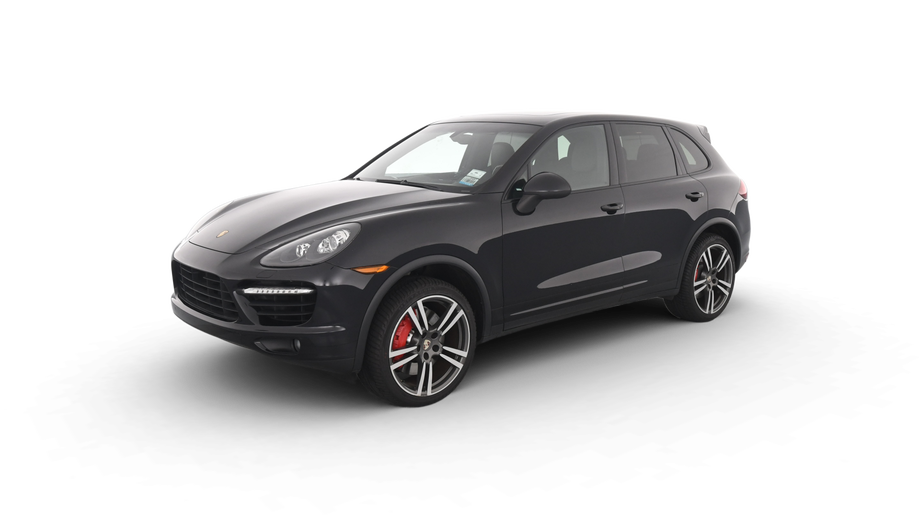
The 2012 Porsche Cayenne is largely a carryover from the 2011 redesign. The most important update is that blind-spot warning joined the options list.
About the 2012 Porsche Cayenne
2nd generation (958.1), second model year after the 2011 redesign; pre-facelift.
Porsche positioned the Cayenne as an SUV that delivered genuine Porsche driving character without giving up everyday usefulness. The core pitch was sports-car-like steering, power, and road manners blended with luxury, five-passenger practicality, towing ability, and available hybrid efficiency. What set it apart from rival luxury SUVs was not just speed, but the way Porsche tried to make every version—from the V6 to the Hybrid to the Turbo—feel athletic and precise rather than merely plush.
The base Cayenne is the practical everyday version, while the Cayenne S adds a 400-hp V8 and a more performance-focused feel. The S Hybrid pairs a supercharged V6 with electric assistance for 380 hp, low-speed electric driving, and engine-off coasting. At the top, the 500-hp Turbo adds air suspension, navigation, sport seats, and parking assistance.
What changed, by category
2012 Porsche Cayenne specs and features by trim
| Feature | |||
|---|---|---|---|
| Engine | V8, 4.8 Liter / V6, Sprchg, Hybrid, 3.0L | V6, 3.6 Liter | V8, Twin Turbo, 4.8L |
| Transmission | Auto, 8-Spd Tiptronic | Auto, 8-Spd Tiptronic | Auto, 8-Spd Tiptronic |
| Drivetrain | AWD | AWD | AWD |
| Fuel Type | Gas / Hybrid | Gas | Gas |
| MPG City | 16–20 mpg | 17 mpg | 15 mpg |
| MPG Highway | 22–24 mpg | 23 mpg | 22 mpg |
| Horsepower | 380–400 hp | 300 hp | 500 hp |
| Torque | 369–427 lb-ft | 295 lb-ft | 516 lb-ft |
| Max Towing | 7716 lb | 7716 lb | 7716 lb |
| Trunk/Cargo | 59.7–62.9 cu-ft | 62.9 cu-ft | 60.2 cu-ft |
| Seats | 5 | 5 | 5 |
| Doors | 4 | 4 | 4 |
| Adaptive Cruise Control | |||
| Adaptive Headlights | |||
| Alarm System | |||
| Automatic Leveling Headlights | |||
| Blindspot Sensors | |||
| Front & Rear Parking Sensors | |||
| Rear View Camera | |||
| Alloy Wheels | |||
| Auto-Dimming Exterior Mirrors | |||
| Fog Lights | |||
| HID Headlights | |||
| Memory Exterior Mirrors | |||
| Power Moonroof | |||
| Panorama Moon Roof | |||
| Rear Spoiler | |||
| Roof Rails | |||
| Bluetooth | |||
| Navigation System | |||
| Premium Audio | |||
| Subwoofer | |||
| Aluminum Interior Trim | |||
| Auto-Dimming Interior Mirror | |||
| Dual-Zone Climate Control | |||
| Heated Front Seats | |||
| Heated Steering Wheel | |||
| Leather Interior Trim | |||
| Leather Seats | |||
| Memory Driver's Seat | |||
| Memory Front Seats | |||
| Memory Steering Wheel | |||
| Ventilated Front Seats | |||
Frequently asked questions
Was the 2012 Porsche Cayenne redesigned?
No. The 2012 Cayenne is the second model year of the generation introduced for 2011, so its body, structure, styling, and core mechanical layout carry over.
Did the 2012 Porsche Cayenne add blind-spot warning?
Yes. Blind-spot warning joined the options list for 2012, but it was not standard, so not every used example has it.
What is different about the 2012 Porsche Cayenne S Hybrid?
The 2012 Cayenne S Hybrid uses a supercharged 3.0-liter V6 and electric motor with 380 hp combined. It can travel at lower speeds on electric power and coast with the gas engine off.
What distinguishes the 2012 Porsche Cayenne Turbo?
The 2012 Cayenne Turbo is the performance flagship, with a 500-hp twin-turbo V8, adjustable air suspension, navigation, sport seats, and parking assistance. Some examples also have the optional performance power kit.
Is the 2012 Porsche Cayenne meaningfully different from the 2011 model?
No, not for most shoppers. The 2012 model keeps the same four core trims and engines; the main differences are optional blind-spot warning, an optional Turbo power kit, and heated front seats becoming optional rather than standard on the Turbo.
Sources
- newsroom.porsche.com — Jcr:76207C3F B4Cc 4642 A6E0 D9E637C0Dd61 / 2012 Cayenne Specs
- newsroom.porsche.com — Jcr:86685638 Efb0 46Ae 8640 1E22F6E44F0B / 2012 Cayenne S S Hybrid Cayenne Turbo Specs.pdf
- newsroom.porsche.com — Jcr:51915409 2Eb1 493D Abd7 E91D1409A303 / 2012 2013 Cayenne CayenneS Specifications.pdf
- newsroom.porsche.com — Jcr:72Ec2508 70E8 43Cd B904 16387D29Ec85 / 2012 2013 Cayenne S Hybrid Specifications.pdf
- newsroom.porsche.com — Jcr:Dbfe2A12 A60A 4535 80D3 2C8647Fad34F / 2012 2013 Cayenne Turbo Specifications.pdf