
Kia Borrego: Trims, Generations & Buyer's Guide
Last updated August 4, 2026
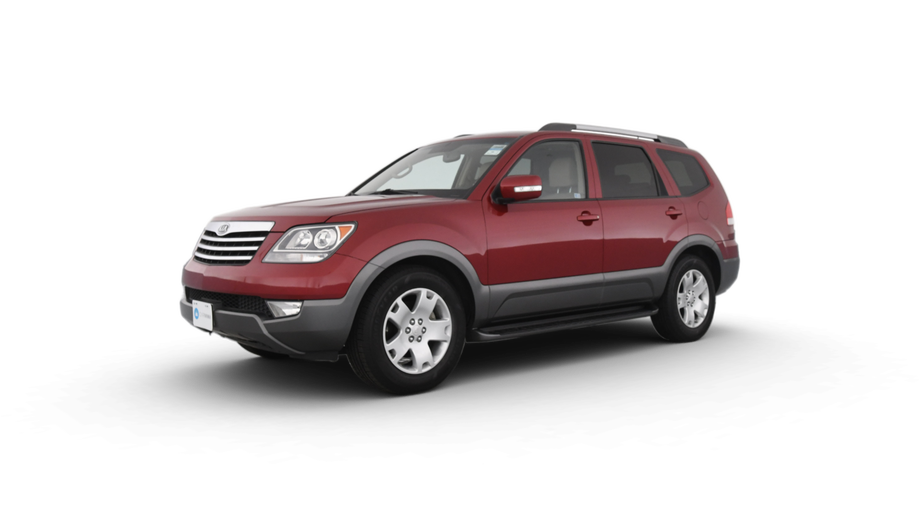
The Kia Borrego is a three-row, seven-seat SUV built more like a truck than a car. It is known for combining family space with V6 or V8 power, serious towing strength, and four-wheel-drive capability.
The Borrego was Kia’s answer for families who needed more muscle than a typical crossover offered. Its defining mix was seven-passenger seating, truck-style construction, and genuine towing and four-wheel-drive ability. It also aimed to feel quieter, more upscale, and better equipped than shoppers might have expected from Kia at the time, but its U.S. run lasted only for 2009.
Strengths
- Every Borrego seats seven, making it useful for families that need three rows.
- Its truck-style construction gives it the sturdy, work-ready character that many car-based crossovers lack.
- Depending on configuration, the 2009 Borrego was rated to tow between 5,000 and 7,500 pounds.
- V6 and V8 engines gave shoppers two levels of strong gas-powered performance.
- Two-wheel-drive and four-wheel-drive versions served buyers with different traction needs.
- The cabin was designed to feel quieter and more upscale than many shoppers expected from Kia at the time.
Who it's for
The Borrego fits a used-SUV shopper who needs three rows for family duty but also plans to tow or travel beyond paved roads. It makes the most sense for someone willing to accept modest gas mileage in return for the stronger, more work-ready feel of a traditional SUV.
Kia Borrego lineup
The 2009 lineup centered on LX and EX, with the Limited arriving later in the model year. LX is the straightforward starting point, while EX is the step-up version for shoppers seeking a higher-tier Borrego. Limited is the one to seek for the lineup’s most luxury-focused take. Because the Borrego lasted only one U.S. model year, these trim identities never evolved across multiple U.S. generations.
Kia Borrego generations
From 2009 to 2009, the Borrego spans 1 generation. The current 1st Generation arrived for 2009.
1st Generation (2009)
The Borrego was a three-row, seven-seat SUV with truck-style construction. It introduced Kia’s first V8 and first six-speed automatic in the U.S., but lasted for only one U.S. model year.
0 In Stock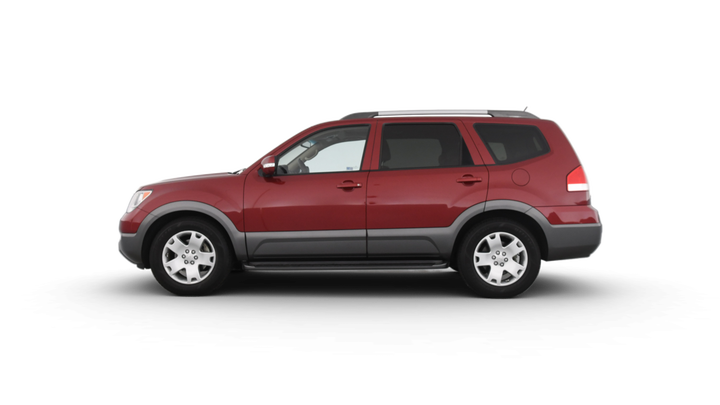
2009New generation
All-new U.S.-market Borrego launched in LX and EX trims. The more luxury-focused Limited joined later in the model year.
Frequently asked questions
Is the Kia Borrego a crossover or a truck-based SUV?
The Kia Borrego is a truck-based, three-row SUV. It was built for shoppers who wanted seven seats along with stronger towing and four-wheel-drive capability than a typical family crossover.
How many people does the Kia Borrego seat?
The Kia Borrego seats seven in three rows. Its second row slides, and both rear rows fold flat to make more room for cargo.
How much can the Kia Borrego tow?
The Kia Borrego’s maximum tow rating ranges from 5,000 to 7,500 pounds across the lineup. The exact limit depends on the vehicle’s engine and configuration, so confirm the rating for the specific used Borrego.
What is the Kia Borrego known for?
The Kia Borrego is known for combining seven-passenger space with V6 or V8 power, truck-style construction, and useful towing ability. It also offered a quieter, more upscale cabin and a long equipment list for its time.
Who is the Kia Borrego a good fit for?
The Kia Borrego fits families that need three rows but also want genuine towing and four-wheel-drive capability. Its folding rear seats help when cargo space matters more than carrying all seven passengers.
How many Kia Borrego generations were sold in the US?
Only one Kia Borrego generation was sold in the US, and it lasted for a single model year. That makes the US-market lineup unusually simple compared with SUVs that changed across several generations.
Does the Kia Borrego come as a hybrid?
No. The US-market Kia Borrego is a gas-powered SUV offered with V6 or V8 power; there is no hybrid version in its US lineup.
Does the Kia Borrego have AWD or four-wheel drive?
The Kia Borrego was sold with either two-wheel drive or four-wheel drive, not a separately named AWD system. Check the individual vehicle because the drivetrain varies.