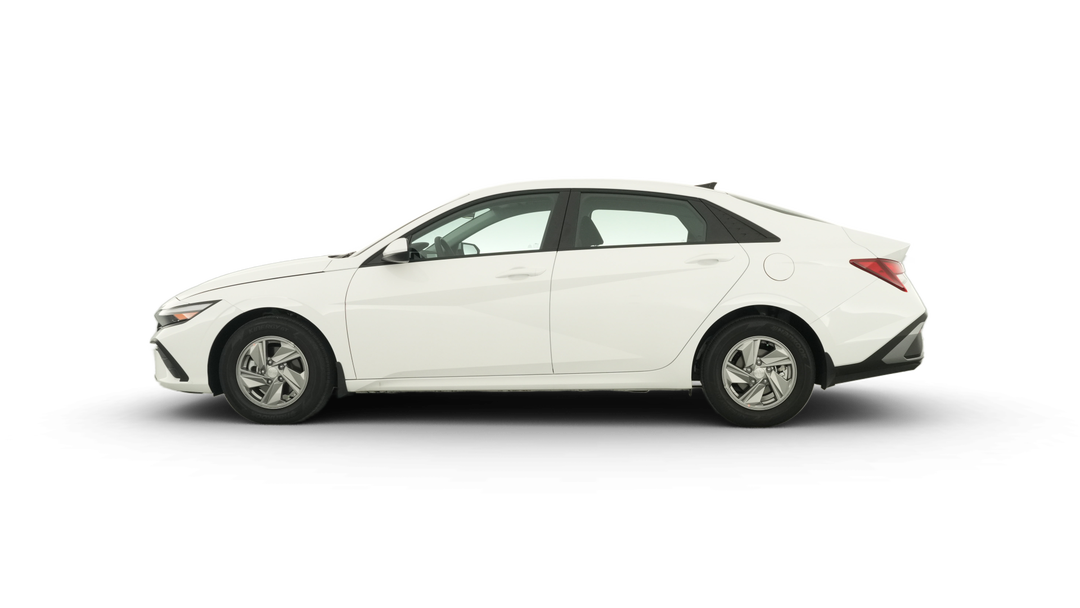
Hyundai Elantra SE, SEL, Limited & More

Last updated August 4, 2026

Hyundai Elantra

The Elantra lineup starts with Blue, GLS, SE, and the base Elantra GT for straightforward daily driving. Blue HEV, SEL HEV, SEL Sport HEV, and Limited HEV form the hybrid branch, ranging from mileage-focused to comfort-rich. Eco, SE Value Edition, SEL, SEL Sport, and Value Edition are the mainstream convenience choices. GS, GT, Touring, Touring GLS, and Touring SE cover coupe or hatchback versatility, while SEL Convenience and SEL Sport Premium bundle extra comfort and driver support. Limited is the comfort-focused gas model. N Line, N-Line, and Sport are the turbocharged performance choices. The older Sport designation also anchors a styling-led branch, but its sporty look is backed by real handling and braking upgrades.

What each trim is known for

Hyundai Elantra Base Model

Base Model

BlueGLSSEbase

The Base Model trim level — Blue, GLS, SE, and the base Elantra GT — is the straightforward Elantra for efficient commuting, simple controls, and everyday usefulness.

Best for: Commuters and small households that want the essentials without paying for extra comfort or performance equipment.


Highlights

  • Efficient four-cylinder power for daily driving
  • Split-folding rear-seat utility on many versions
  • Core collision-warning features on newer SE models
  • Phone-friendly touchscreen systems on newer SE and GT examples
137 in stock
Hyundai Elantra Hybrid

Hybrid

Blue HEVLimited HEVSEL HEVSEL Sport HEV

The Hybrid trim level — Blue HEV, Limited HEV, SEL HEV, and SEL Sport HEV — is the gas-electric branch, with versions ranging from maximum-efficiency commuter to premium long-distance sedan.

Best for: Drivers who prioritize fuel economy but still want a roomy sedan, with comfort and technology varying by member trim.


Highlights

  • 139-hp gas-electric powertrain
  • Dual-clutch automatic and front-wheel drive
  • Independent rear suspension
  • Efficiency-focused Blue and comfort-focused Limited versions

Compared with Base Model, Hybrid adds gas-electric power and independent rear suspension; upper member trims add richer seating, larger displays, and more driver support.

46 in stock
Hyundai Elantra Mid-Level

Mid-Level

EcoSE Value EditionSELSEL SportValue Edition

The Mid-Level trim level — Eco, SE Value Edition, SEL, SEL Sport, and Value Edition — is the value-focused step beyond the basics, with Eco emphasizing mileage and the others bundling useful comfort and convenience features.

Best for: Everyday drivers who want keyless access, easier phone use, and extra cabin comfort without moving to the Limited.


Highlights

  • Gas-powered focus, with Eco serving as the mileage specialist
  • Keyless start and hands-free trunk access on many versions
  • Comfort upgrades such as heated seats or automatic climate control
  • Smartphone integration on newer examples

This level moves back to gas power from Hybrid and broadens the selection of value-focused convenience packages, including keyless start, heated seats, and hands-free trunk access on many members.

266 in stock
Hyundai Elantra Practical Upgrade

Practical Upgrade

GSGTSEL ConvenienceSEL Sport PremiumTouringTouring GLSTouring SE

The Practical Upgrade trim level — GS, GT, SEL Convenience, SEL Sport Premium, Touring, Touring GLS, and Touring SE — mixes older coupe and hatchback versatility with newer comfort-and-safety packages.

Best for: Drivers who want more cargo flexibility, a distinctive body style, or an everyday comfort bundle without choosing the Limited.


Highlights

  • Coupe style in the GS
  • Hatchback or wagon-like cargo flexibility in GT and Touring models
  • Heated seats and a sunroof on better-equipped members
  • Adaptive cruise control on newer SEL-based versions

Compared with Mid-Level, it adds deeper comfort packages and, among older members, coupe or hatchback body styles with extra versatility.

54 in stock
Hyundai Elantra Premium Comfort

Premium Comfort

Limited

The Premium Comfort trim level — Limited — is the upscale gas Elantra, centered on richer seating, cabin technology, premium audio, and added highway-driving support.

Best for: Drivers who want the most comfort-focused gas Elantra and care more about a polished cabin than turbocharged performance.


Highlights

  • Heated H-Tex-trimmed seats
  • Power-adjustable driver seat with lumbar support
  • Paired large displays and Bose audio
  • Adaptive cruise control with highway lane-centering support

Compared with Practical Upgrade, Limited adds richer seat trim, power driver adjustment, premium audio, paired large displays, and more complete highway-driving assistance.

79 in stock
Hyundai Elantra Performance

Performance

N LineN-LineSport

The Performance trim level — N Line, N-Line, and Sport — is the turbocharged, sharper-handling Elantra branch below the more extreme Elantra N.

Best for: Drivers who want stronger acceleration and more responsive handling while keeping everyday comfort and practicality.


Highlights

  • 201-hp turbocharged engine
  • Quick-shifting dual-clutch automatic on many examples
  • Independent rear suspension and firmer chassis tuning
  • Supportive sport seats and upgraded cabin equipment

Compared with Premium Comfort, Performance shifts the focus from luxury to stronger turbo acceleration, sportier suspension tuning, and more supportive seats while retaining useful comfort technology.

30 in stock
Hyundai Elantra Sport Styling

Sport Styling

Sport

The Sport Styling trim level — Sport — is the older sedan's aggressive-look branch, with its appearance backed by turbo power, firmer suspension, larger brakes, and sport seats.

Best for: Used-car shoppers who want a more expressive Elantra sedan with genuine performance hardware rather than appearance changes alone.


Highlights

  • Turbocharged performance hardware
  • Sport-tuned suspension and steering
  • Larger brakes and independent rear suspension
  • Leather sport seats and LED lighting

This is not a separate mechanical step above Performance; it isolates the older Sport sedan's styling-led identity within the same broader performance family.

13 in stock

Trim comparison

FeatureHybridMid-LevelBase ModelPerformanceSport StylingPremium ComfortPractical Upgrade
Includes
Blue HEV, Limited HEV, SEL HEV, SEL Sport HEV46 in stock
Eco, SE Value Edition, SEL, SEL Sport, Value Edition266 in stock
Blue, GLS, SE, base137 in stock
N Line, N-Line, Sport30 in stock
GS, GT, SEL Convenience, SEL Sport Premium, Touring, Touring GLS, Touring SE54 in stock
Primary roleFuel-saving sedan branchConvenience-focused valueStraightforward daily driverTurbo performance branchOlder sporty sedan identityUpscale gas sedanUtility or comfort bundle
Body-style emphasisSedanSedanMostly sedan; base GT hatchbackSedan and GT hatchbackSedanSedanSedan, coupe, and hatchback
Recent powertrain1.6L hybrid; 139 hp2.0L gas; 147 hp2.0L gas; 147 hp1.6L turbo gas; 201 hpTurbocharged gas2.0L gas; 147 hp2.0L gas; 147 hp
Automatic type6-speed dual-clutchIVT automaticIVT automatic7-speed dual-clutchDual-clutch automaticIVT automaticIVT automatic
Recent EPA mpg, city/highway49–51 / 52–58 mpg30 / 40 mpg31 / 40 mpg28 / 35 mpgVaries by model year30 / 40 mpg30 / 40 mpg
Cabin and convenience focusBlue efficiency to Limited comfortKeyless access and daily conveniencesCore essentialsSport seats with comfort technologyHeated leather sport seatsH-Tex, power seat, premium audioHeated seats and sunroof on key members
Driving characterEfficiency with independent rear suspensionComfortable daily drivingEveryday commutingSharper suspension and stronger accelerationSport tuning and larger brakesComfort and highway supportComfort-focused; sport tuning on Touring

Frequently asked questions

What does the Elantra SE leave out compared with higher trims?

On newer models, SE keeps the essentials: a 147-hp gas engine, an 8-inch touchscreen, wireless Apple CarPlay and Android Auto, LED headlights, and blind-spot alerts. Higher trims add conveniences such as push-button start, automatic climate control, wireless charging, larger screens, and richer seating.

What does SEL Sport add over SE?

In recent years, SEL Sport keeps the SE’s 147-hp engine but adds push-button start, dual-zone automatic climate control, wireless phone charging, hands-free trunk opening, and sport-themed details. It is a convenience upgrade, not a meaningful performance step.

What is the difference between SEL Sport and SEL Convenience?

In the later seventh-generation lineup, SEL Convenience is the more comfort- and technology-focused trim. It adds two 10.25-inch displays, heated front seats, a sunroof, navigation, and adaptive cruise control. SEL Sport uses the smaller screen and focuses on useful conveniences with sport-themed styling.

Is SEL Sport Premium the same as SEL Convenience?

Not exactly. At the end of the seventh generation, SEL Sport Premium takes over a similar comfort-upgrade role, adding heated seats, a sunroof, adaptive cruise control, and broader forward-collision detection. Unlike the preceding SEL Convenience, it retains an 8-inch touchscreen with wireless phone integration.

What does Limited add over SEL Convenience?

On newer seventh-generation cars, Limited adds a more complete premium cabin: H-Tex upholstery, a power driver seat, Bose audio, and highway lane-centering support. Both trims include large displays, heated seats, a sunroof, and adaptive cruise control, so Limited mainly adds seating, audio, and driver-support upgrades.

Should I get an Elantra Limited or N Line?

Pick Limited for comfort and driver assistance; pick N Line for stronger acceleration and sharper handling. On newer models, Limited uses the 147-hp engine and adds H-Tex seating and highway driving support. N Line uses a 201-hp turbo engine, a quick-shifting automatic, sport seats, and a more responsive rear suspension.

Are Elantra Sport and N Line the same thing?

They fill a similar sporty role in different eras, but they are not the same badge. The older Sport sedan used a 201-hp turbo engine and firmer chassis tuning. Since the seventh-generation redesign, N Line has served as the sporty step below the full Elantra N, also using a 201-hp turbo engine.

What is the difference between Elantra N Line and Elantra N?

N Line is the less extreme sporty Elantra. In recent years it has a 201-hp turbo engine, a quick-shifting automatic, sport seats, and handling upgrades suited to everyday driving. The full Elantra N sits above it as the more serious performance model; the N Line badge does not mean it is an Elantra N.

What is the difference between Blue HEV and SEL Sport HEV?

On newer hybrids, Blue HEV is the fuel-economy-focused trim, rated at 54 mpg combined and fitted with an 8-inch touchscreen. SEL Sport HEV adds two 10.25-inch displays, navigation, wireless charging, and sport-themed cabin details while keeping the same 139-hp hybrid system.

What does Limited HEV add over SEL Sport HEV?

Limited HEV adds the hybrid range’s main comfort and driver-assistance upgrades: heated and ventilated H-Tex seats, driver-seat memory, Bose audio, adaptive cruise control, and highway lane-centering support. Both use the same 139-hp hybrid system and two 10.25-inch displays.

What is the difference between Limited and Limited HEV?

On newer Elantras, both Limited versions emphasize large displays, upgraded seating, Bose audio, and highway driving assistance. The key difference is underneath: gas Limited uses a 147-hp 2.0-liter engine with a continuously variable automatic, while Limited HEV uses a 139-hp gas-electric system with a six-speed automatic.

Which Elantra trim makes the most sense for a basic commute?

SE is the straightforward pick if you want a newer gas Elantra with core phone integration and safety features. Blue HEV suits longer, fuel-conscious commuting and is rated at 54 mpg combined. SEL Sport is worth considering when push-button start, automatic climate control, and wireless charging matter more.

Which Elantra trim is a good fit for frequent highway trips?

On newer models, Limited HEV is the strongest highway-focused fit. It combines the efficient hybrid system with adaptive cruise control, highway lane-centering support, a power driver seat with memory, and heated and ventilated front seats. Gas Limited offers similar driver support without the hybrid drivetrain.

What is the difference between Elantra GT and GT N Line?

Among later Elantra GT hatchbacks, the base GT favors cargo utility and everyday driving with a 161-hp 2.0-liter engine. GT N Line adds a 201-hp turbo engine, a more responsive rear suspension, larger brakes, LED lighting, and heated leather sport seats. Both retain the hatchback’s flexible cargo area.

What does Value Edition mean on an older Elantra?

Value Edition generally identifies a better-equipped middle trim rather than a different engine or body style. Depending on the era, it bundles useful items such as heated front seats, a sunroof, push-button start, smartphone integration, blind-spot monitoring, and hands-free trunk opening.

Do the Eco and Blue badges mean the same thing?

No. Eco was an older gas sedan trim with a small turbo engine, a seven-speed automatic, and engine stop-start. Blue has meant an efficiency-focused Elantra in different eras: an older stripped-back gas model and, on newer cars, the entry Elantra Hybrid. The model year is essential when reading either badge.