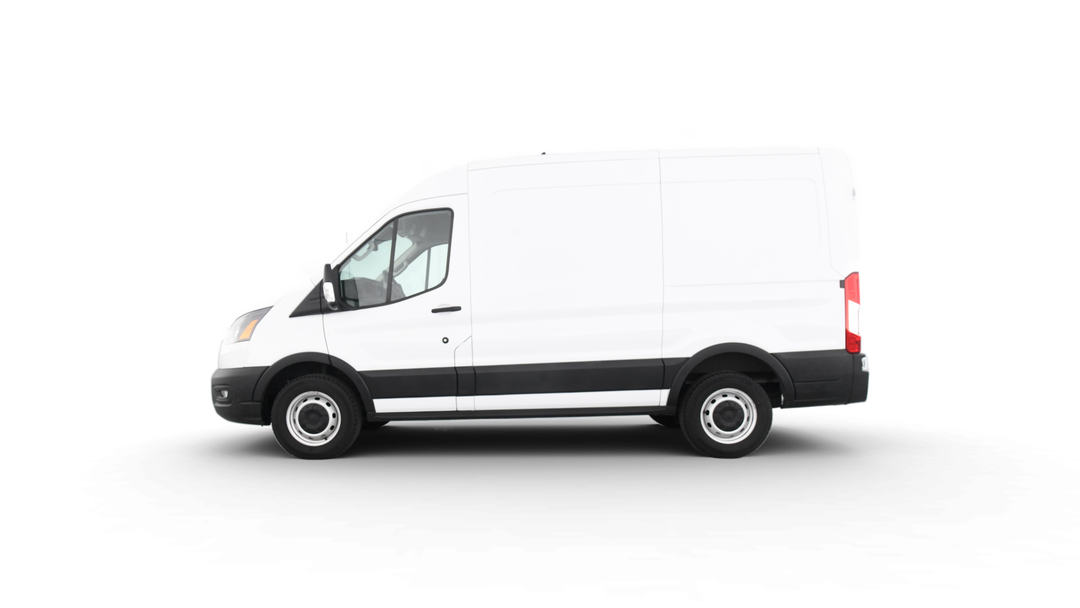
Ford Transit 250 Cargo Trim Levels

Last updated August 4, 2026

Ford Transit 250

The Ford Transit 250 lineup is organized mainly by body length and roof height. Compact Cargo is the easiest to place on tight routes, while Standard Cargo keeps a low roof but adds a longer load floor. The medium-roof branch splits into Mid-Roof RWB, the shorter regular-wheelbase version, and Mid-Roof LWB, the longer-wheelbase version. High Roof LWB adds stand-up room without the extended rear body, while Extended High is the maximum-space choice for long, bulky cargo and large interior builds.

What each trim is known for

Ford Transit 250 Compact Cargo

Compact Cargo

Low RoofLow Roof w/60/40 Side Door w/RWBLow Roof w/RWBLow Roof w/Sliding Side Door w/RWBMedium Roof

The Compact Cargo trim level groups Low Roof, Low Roof w/60/40 Side Door w/RWB, Low Roof w/RWB, Low Roof w/Sliding Side Door w/RWB, and Medium Roof versions around the shortest, easiest-to-place Transit 250 cargo body.

Best for: City delivery, repair, and trade workers who value easier parking and tighter-route maneuverability over maximum cargo length.


Highlights

  • Shortest-body focus for tighter streets and parking areas
  • Lower overall height on the low-roof members
  • Split-door or sliding passenger-side access, depending on the member trim
  • Rear cargo doors for loading from behind
0 in stock
Ford Transit 250 Standard Cargo

Standard Cargo

Low Roof w/60/40 Side Door w/LWBLow Roof w/LWBLow Roof w/Sliding Side Door w/LWB

The Standard Cargo trim level includes Low Roof w/60/40 Side Door w/LWB, Low Roof w/LWB, and Low Roof w/Sliding Side Door w/LWB, pairing a low roof with the longer-wheelbase body.

Best for: Businesses that need more load-floor length but still care about garage clearance and a lower exterior profile.


Highlights

  • Low-roof, long-wheelbase cargo body
  • More usable load length than Compact Cargo
  • Split-door or sliding passenger-side access, depending on the member trim
  • Useful balance of cargo room and height-restricted access

Adds a longer wheelbase and more cargo-floor length while retaining the low-roof focus.

0 in stock
Ford Transit 250 Mid-Roof RWB

Mid-Roof RWB

Medium Roof w/Dual Sliding Doors w/RWBMedium Roof w/Dual Sliding Side Doors w/RWBMedium Roof w/RWBMedium Roof w/Sliding Side Door w/RWB

The Mid-Roof RWB trim level includes Medium Roof w/Dual Sliding Doors w/RWB, Medium Roof w/Dual Sliding Side Doors w/RWB, Medium Roof w/RWB, and Medium Roof w/Sliding Side Door w/RWB, adding upright room to the shorter regular-wheelbase body.

Best for: Urban trades and delivery operators who need taller interior space without the longer footprint of a long-wheelbase van.


Highlights

  • Medium roof for more upright cargo room
  • Shorter regular-wheelbase footprint
  • Single or dual sliding side-door layouts
  • Work-focused cargo body for city routes and frequent stops

Trades some load-floor length for a taller cargo area and a shorter, easier-to-place body.

0 in stock
Ford Transit 250 Mid-Roof LWB

Mid-Roof LWB

Medium Roof w/Dual Sliding Side Doors w/LWBMedium Roof w/LWBMedium Roof w/Sliding Side Door w/LWB

The Mid-Roof LWB trim level covers Medium Roof w/Dual Sliding Side Doors w/LWB, Medium Roof w/LWB, and Medium Roof w/Sliding Side Door w/LWB, combining added interior height with the longer-wheelbase body.

Best for: Trades, parcel operators, and mobile-service users who want a broad-use mix of cargo length and room to move inside.


Highlights

  • Medium-roof, long-wheelbase cargo body
  • More floor length than Mid-Roof RWB
  • Single or dual sliding side-door layouts
  • Middle-ground size for shelving and service builds

Adds the longer body to the same medium-roof idea, creating more load-floor room for cargo and interior builds.

0 in stock
Ford Transit 250 High Roof LWB

High Roof LWB

High RoofHigh Roof w/Dual Sliding Side Doors w/LWBHigh Roof w/LWBHigh Roof w/Sliding Side Door w/LWB

The High Roof LWB trim level includes High Roof, High Roof w/Dual Sliding Side Doors w/LWB, High Roof w/LWB, and High Roof w/Sliding Side Door w/LWB, providing full-height cargo space without the extended rear body.

Best for: Operators carrying tall equipment or building shelving and mobile work areas who do not need the longest Transit body.


Highlights

  • High-roof, long-wheelbase cargo body
  • Stand-up interior space for tall cargo and work layouts
  • Standard-length rear body rather than an extended overhang
  • Single or dual sliding side-door layouts

Adds a taller roof and more vertical cargo room while keeping the long-wheelbase body.

0 in stock
Ford Transit 250 Extended High

Extended High

Extended Length High RoofExtended Length High Roof w/Dual Sliding Doors w/LWBExtended Length High Roof w/Dual Sliding Side Doors w/LWBExtended Length High Roof w/Sliding Side Door w/LWBHigh Roof Extended Length

The Extended High trim level brings together Extended Length High Roof, Extended Length High Roof w/Dual Sliding Doors w/LWB, Extended Length High Roof w/Dual Sliding Side Doors w/LWB, Extended Length High Roof w/Sliding Side Door w/LWB, and High Roof Extended Length as the maximum-space Transit 250 body.

Best for: Delivery fleets, mobile trades, and conversion users who prioritize the longest load floor and the largest enclosed cargo area.


Highlights

  • Extended-length high-roof cargo body
  • Longest cargo-floor focus in the Transit 250 lineup
  • Maximum enclosed space for bulky loads and large interior builds
  • Single or dual sliding side-door layouts

Adds the extended rear body to the high-roof layout for more floor length and overall cargo volume.

0 in stock

Trim comparison

FeatureMid-Roof LWBMid-Roof RWBCompact CargoExtended HighHigh Roof LWBStandard Cargo
Includes
Medium Roof w/Dual Sliding Side Doors w/LWB, Medium Roof w/LWB, Medium Roof w/Sliding Side Door w/LWB0 in stock
Medium Roof w/Dual Sliding Doors w/RWB, Medium Roof w/Dual Sliding Side Doors w/RWB, Medium Roof w/RWB, Medium Roof w/Sliding Side Door w/RWB0 in stock
Low Roof, Low Roof w/60/40 Side Door w/RWB, Low Roof w/RWB, Low Roof w/Sliding Side Door w/RWB, Medium Roof0 in stock
Extended Length High Roof, Extended Length High Roof w/Dual Sliding Doors w/LWB, Extended Length High Roof w/Dual Sliding Side Doors w/LWB, Extended Length High Roof w/Sliding Side Door w/LWB, High Roof Extended Length0 in stock
High Roof, High Roof w/Dual Sliding Side Doors w/LWB, High Roof w/LWB, High Roof w/Sliding Side Door w/LWB0 in stock
Low Roof w/60/40 Side Door w/LWB, Low Roof w/LWB, Low Roof w/Sliding Side Door w/LWB0 in stock
Body-length focusLong wheelbaseRegular wheelbaseShortest-body focusExtended bodyLong wheelbaseLong wheelbase
Roof focusMedium roofMedium roofLow roof is central; Medium Roof also appearsHigh roofHigh roofLow roof
Main space priorityHeight plus floor lengthMore height in a short bodySmall exterior footprintMaximum length and volumeStand-up room without extensionLonger low-roof load floor
Side-access layoutsSingle or dual sliding doorsSingle or dual sliding doorsSplit or passenger-side sliding doorSingle or dual sliding doorsSingle or dual sliding doorsSplit or passenger-side sliding door
Tight-route fitLonger and tallerShorter body, taller roofPrimary strengthSpace takes priorityTall-body priorityLower roof, longer body
Typical work identityTrades and mobile serviceUrban work with upright storageCity service and deliveryBulky loads and large buildsTall cargo and interior work areasLonger cargo under a low roof

Frequently asked questions

Why do Transit 250 listings use roof and length names instead of normal trim names?

Transit 250 “trims” are mainly body configurations, not a simple equipment ladder. Names such as Low Roof w/RWB or High Roof Extended Length describe roof height, wheelbase, body length, and sometimes the side-door layout.

What do RWB and LWB mean on a Transit 250?

RWB means regular wheelbase, with 130 inches between the front and rear wheels. LWB means long wheelbase, with 148 inches. RWB vans are easier to place in tight areas, while LWB vans provide more cargo length.

What’s the difference between Low Roof RWB and Low Roof LWB?

Low Roof LWB adds cargo room without adding roof height. Representative cargo volume rises from 246.7 cubic feet in the RWB body to 277.7 cubic feet in the LWB body. The shorter RWB is easier to maneuver.

What does a Medium Roof RWB add over a Low Roof RWB?

The Medium Roof RWB adds much more interior height while keeping the short wheelbase. Its cargo height is 72 inches and its volume is 315.2 cubic feet, versus 56.9 inches and 246.7 cubic feet for the low-roof body.

What’s the difference between Medium Roof RWB and Medium Roof LWB?

The Medium Roof LWB adds floor length and cargo volume while keeping the same 72-inch interior height. Representative volume grows from 315.2 to 357.1 cubic feet. The RWB body is shorter and easier to use on tight routes.

What does High Roof LWB add over Medium Roof LWB?

High Roof LWB mainly adds standing room and cargo volume. Representative maximum cargo height rises from 72 to 81.5 inches, while volume increases from 357.1 to 404.3 cubic feet. Both use the 148-inch wheelbase.

What’s the difference between High Roof LWB and Extended High?

Extended High keeps the tall roof but adds rear body length. Representative cargo volume grows from 404.3 to 487.3 cubic feet. High Roof LWB is easier to place, while Extended High suits long loads and large interior builds.

What’s the difference between a sliding side door and 60/40 side doors?

A sliding door moves along the van’s side, so it needs less space beside the van when open. The 60/40 setup uses two hinged panels that swing outward. On comparable low-roof bodies, both provide a 51.2-inch-wide opening.

Why would I want dual sliding side doors on a Transit 250?

Dual sliding doors provide cargo access from either side, which helps on curbside routes and around shelving or equipment. They appeared on some medium- and high-roof used configurations, so availability depends on model year and body style.

Which Transit 250 configuration is easiest to drive in a city?

Low Roof RWB is the easiest city-focused configuration. Its 130-inch wheelbase and shorter body are more manageable on narrow streets, in parking areas, and under height restrictions, though it gives up cargo length and standing room.

Which Transit 250 should I pick if I need to stand inside?

Look first at a medium- or high-roof body. Medium-roof vans provide up to 72 inches of cargo height, while high-roof versions provide about 81.5 inches in many configurations. Flooring and interior upfits can reduce usable height.

Which Transit 250 has the most cargo room?

The Extended High body has the most cargo room in this lineup, with about 487.3 cubic feet behind the front seats. It suits bulky loads, long shelving layouts, and mobile workspaces, but its extra length makes tight parking harder.

Which Transit 250 body is a good middle ground for trade work?

Medium Roof LWB is the broad middle-ground choice. It combines a 148-inch wheelbase, 72 inches of cargo height, and 357.1 cubic feet of space without the taller exterior or longer rear overhang of the biggest bodies.

Do newer Transit 250 body configurations share the same cabin technology?

On the newest vans, the main body configurations share a 12-inch touchscreen with wireless Apple CarPlay and Android Auto, an 8-inch driver display, keyless start, and a driver-assist suite. Older used vans can differ substantially.

Do all Transit 250 rear cargo doors open the same distance?

No. Rear-door swing depends on body style and year. For 2025, low- and medium-roof cargo vans used 180-degree doors, while high-roof vans used 253-degree doors. Earlier combinations differed, so check the actual van.