
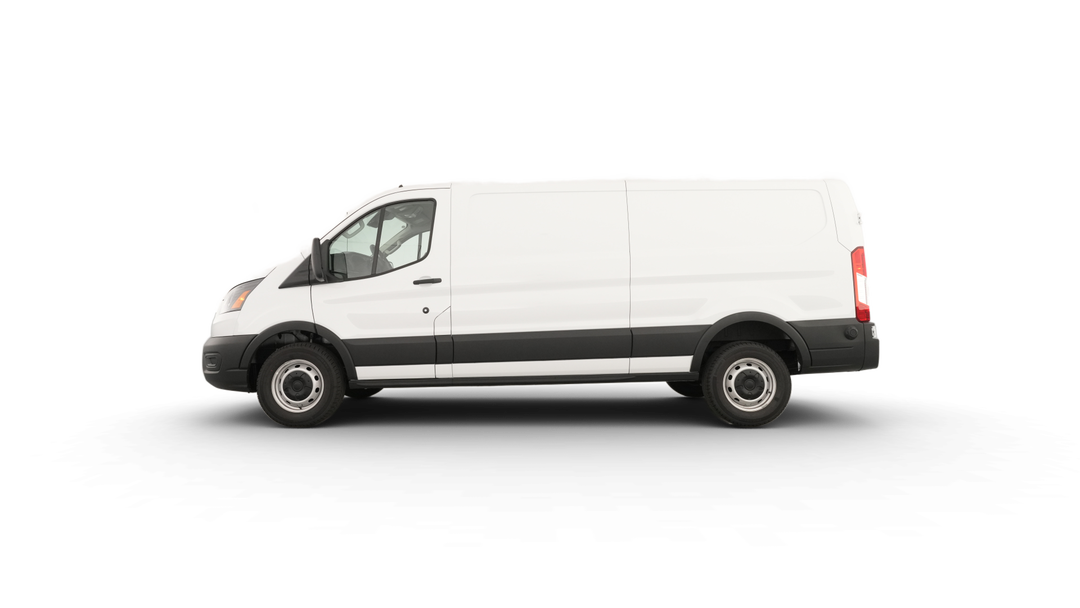
The Ford Transit 150 lineup splits into cargo and passenger branches. The Work Van is the two-seat cargo entry, with low- and medium-roof bodies, regular- and long-wheelbase layouts, and several side-door arrangements for different jobs.
Among passenger vans, XL is the straightforward base trim with multi-row seating and rear climate control. XLT is the comfort step-up, adding a more finished cabin and, depending on year, better rear-seat comfort, more parking help, broader blind-spot coverage, and a larger touchscreen.
What each trim is known for
Work Van
Low RoofLow Roof w/60/40 Side Door w/LWBLow Roof w/60/40 Side Door w/RWBLow Roof w/LWBLow Roof w/RWBLow Roof w/Sliding Side Door w/LWBLow Roof w/Sliding Side Door w/RWBMedium RoofMedium Roof w/Dual Sliding Side Doors w/LWBMedium Roof w/Dual Sliding Side Doors w/RWB+4 more
Medium Roof w/LWBMedium Roof w/RWBMedium Roof w/Sliding Side Door w/LWBMedium Roof w/Sliding Side Door w/RWB
The Work Van trim level covers Low Roof and Medium Roof members, including RWB, LWB, 60/40-door, single-sliding-door, and dual-sliding-door versions; it is the cargo-focused Transit 150 built around the needs of the job.
Best for: Delivery operators, tradespeople, fleets, and upfit buyers who need cargo room rather than passenger rows.
Highlights
Two-seat cargo layout for tools, parcels, equipment, or a specialized upfit
Low- and medium-roof bodies for balancing clearance against upright cargo room
Regular- and long-wheelbase layouts for balancing maneuverability against load length
60/40 swing-out, single-sliding, or dual-sliding side-door access, depending on the member trim
XL w/Low RoofXL w/Low Roof w/60/40 Side DoorXL w/Low Roof w/Sliding Side DoorXL w/Medium RoofXL w/Medium Roof w/Sliding Side Door
The Passenger Base trim level groups XL w/Low Roof, XL w/Low Roof w/60/40 Side Door, XL w/Low Roof w/Sliding Side Door, XL w/Medium Roof, and XL w/Medium Roof w/Sliding Side Door as straightforward people-moving vans.
Best for: Shuttle, church, hotel, school, organization, or family users who value durable group transportation over added cabin comforts.
Highlights
Multi-row passenger seating with windows around the passenger area
Front and rear air conditioning
Low- or medium-roof bodies with 60/40 or sliding side-door layouts, depending on the member trim
Core collision braking, lane-keeping, and automatic high-beam assistance
Compared with the Work Van, Passenger Base adds a passenger body with multiple seating rows, all-around windows, and rear climate control.
XLT w/Low RoofXLT w/Low Roof w/60/40 Side DoorXLT w/Low Roof w/Sliding Side DoorXLT w/Medium RoofXLT w/Medium Roof w/Sliding Side Door
The Comfort Van trim level groups XLT w/Low Roof, XLT w/Low Roof w/60/40 Side Door, XLT w/Low Roof w/Sliding Side Door, XLT w/Medium Roof, and XLT w/Medium Roof w/Sliding Side Door as the more passenger-friendly Transit 150s.
Best for: Frequent shuttle and group-transport operators who want passengers to be more comfortable and the driver to have more convenience and parking support.
Highlights
A more finished passenger cabin than the XL
Rear seats that recline and include inboard armrests
Added blind-spot, cross-traffic, and parking support on later examples
A larger touchscreen on later examples, while older vans use a smaller audio display
Compared with Passenger Base, Comfort Van adds a more passenger-friendly cabin with reclining rear seats and armrests; depending on year, it also brings stronger parking and blind-spot support and a larger touchscreen.
Low Roof, Low Roof w/60/40 Side Door w/LWB, Low Roof w/60/40 Side Door w/RWB, Low Roof w/LWB, Low Roof w/RWB, Low Roof w/Sliding Side Door w/LWB, Low Roof w/Sliding Side Door w/RWB, Medium Roof, Medium Roof w/Dual Sliding Side Doors w/LWB, Medium Roof w/Dual Sliding Side Doors w/RWB+4 more Medium Roof w/LWB, Medium Roof w/RWB, Medium Roof w/Sliding Side Door w/LWB, Medium Roof w/Sliding Side Door w/RWB8 in stock
XLT w/Low Roof, XLT w/Low Roof w/60/40 Side Door, XLT w/Low Roof w/Sliding Side Door, XLT w/Medium Roof, XLT w/Medium Roof w/Sliding Side Door5 in stock
XL w/Low Roof, XL w/Low Roof w/60/40 Side Door, XL w/Low Roof w/Sliding Side Door, XL w/Medium Roof, XL w/Medium Roof w/Sliding Side Door1 in stock
Main role
Cargo, trades, deliveries, and upfits
More comfortable shuttle and group transportation
Straightforward group transportation
Seating layout
Two front seats
Multi-row seating with reclining rear seats and armrests
Multi-row passenger seating
Body and side-door choices
Low/medium roof; RWB/LWB; 60/40, single-sliding, or dual-sliding doors
Low/medium roof; 60/40 or sliding side door
Cabin focus
Durable cargo-work layout
More finished passenger space and added rear-seat comfort
Core passenger equipment and rear climate control
Infotainment by era
Varies by year; recent vans add a large touchscreen and wireless phone integration
Basic display on older vans; larger touchscreen on later vans
Basic audio display with Bluetooth and USB
Driver assistance
Varies by year; newer vans add collision braking, lane keeping, and parking sensors
Adds blind-spot, cross-traffic, and side/reverse sensing in later years
Collision braking, lane keeping, and automatic high beams
Frequently asked questions
Are Low Roof and Medium Roof actual Transit 150 trim levels?
They are mainly body descriptions, not traditional luxury steps. Work-van names combine roof height, wheelbase, and door style. On used passenger vans, XL and XLT identify the equipment level, while Low Roof and Medium Roof describe the body.
What do RWB and LWB mean on a Transit 150?
RWB means the shorter 130-inch regular wheelbase, while LWB means the longer 148-inch wheelbase. RWB is easier to place in tight areas. LWB provides a longer cargo floor and more room.
What is the difference between a Low Roof and Medium Roof Transit 150?
The Medium Roof provides substantially more upright cargo room and makes moving around inside easier. The Low Roof gives up vertical space but is better suited to garages, loading areas, and routes with height restrictions.
What is the difference between regular- and long-wheelbase Transit 150 cargo vans?
The long-wheelbase van adds floor length and cargo volume. Low-roof cargo space rises from 246.7 to 277.7 cubic feet, while medium-roof space rises from 315.2 to 357.1 cubic feet. The shorter van is easier to maneuver.
Should I get a sliding side door or 60/40 side doors?
A sliding door works better beside parked vehicles, at curbs, or in narrow alleys because it does not swing outward. The 60/40 doors create a wide opening but need clear space beside the van. Used availability varies by body and year.
What do dual sliding side doors add over one sliding door?
Dual sliding doors provide cargo access from either side of the van. That helps delivery and service crews working in changing parking situations. A single passenger-side slider is simpler and works well when loading is normally done from the curb.
How does a Low Roof LWB compare with a Medium Roof RWB?
The Low Roof LWB favors a longer floor while keeping overall height down. The Medium Roof RWB is shorter outside but has more vertical room and 315.2 cubic feet of cargo space, versus 277.7 cubic feet for the low-roof long-wheelbase setup.
What is the difference between a Work Van and an XL passenger van?
The Work Van is the two-seat cargo layout built for tools, parcels, shelving, and specialty equipment. On used passenger models through 2022, the XL is the basic people mover with multiple rows of seats, rear air conditioning, windows, and passenger-focused interior fittings.
What does the XLT add over the XL passenger van?
On used passenger vans through 2022, the XLT is the more comfort-focused step. Depending on year, it adds features such as reclining rear seats with armrests, more parking help, wider blind-spot coverage, upgraded mirrors, and a larger touchscreen on later models.
Should I pick a Low Roof XL or Medium Roof XL?
Pick the Low Roof XL when garage clearance and a lower step-in height matter most. Pick the Medium Roof XL when passengers enter and exit often or need more room to move inside. Both are basic passenger-focused trims rather than cargo work vans.
Should I pick a Low Roof XLT or Medium Roof XLT?
The Low Roof XLT combines the more comfortable passenger equipment with easier clearance. The Medium Roof XLT keeps those passenger upgrades but adds headroom for frequent boarding and movement inside. These XLT passenger configurations belong to the 2015–2022 used lineup.
Which Transit 150 setup is easiest for city delivery work?
A Low Roof RWB cargo van with a sliding side door is the city-friendly choice. Its shorter 130-inch wheelbase is easier to maneuver and park, while the slider helps with curbside loading where there is little room to swing a door outward.
Which Transit 150 configuration works well as a mobile workshop?
A Medium Roof LWB work van is the stronger fit when the job needs shelving, taller equipment, and room to move inside. Its 148-inch wheelbase and 357.1 cubic feet of cargo space provide more working room than the shorter or low-roof bodies.
Is the XL or XLT better for regular shuttle duty?
The XLT better suits frequent passenger service because it adds comfort and driver-help features on used 2015–2022 passenger vans. The XL is the simpler choice when durable seating, rear climate control, and basic group transportation matter more than extra cabin equipment.
Do all Transit 150 work-van layouts have the same screen and safety features?
No, not across all used years. The body labels mainly describe size and access, while cabin equipment depends on year. On 2026 vans, a 12-inch touchscreen, wireless Apple CarPlay and Android Auto, digital gauges, push-button start, and a broad driver-assistance suite became standard.