
2020 Hyundai Kona Electric: What's New, Specs & Features
Last updated August 4, 2026
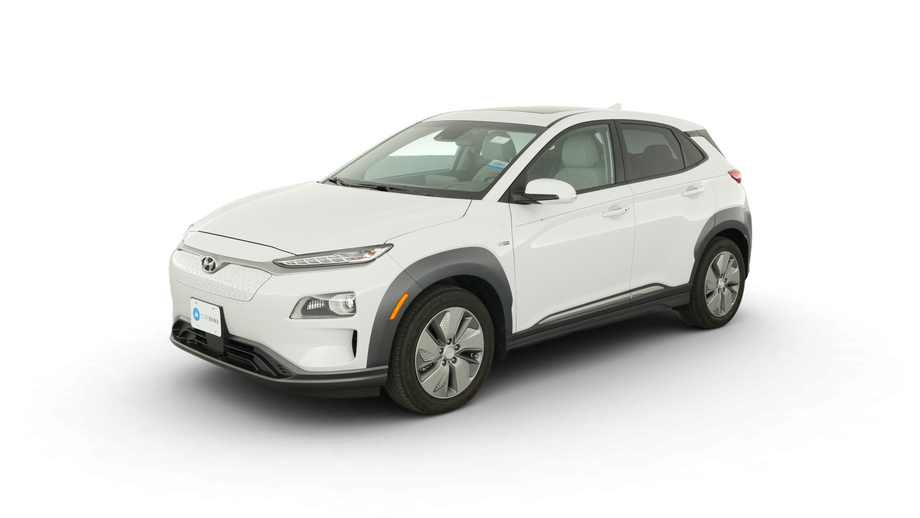
For 2020, the Hyundai Kona Electric’s main change is a standard battery warmer on the two higher trims to support battery operation and charging in cold weather. The top trim also gets a larger navigation touchscreen, while the motor, battery capacity and rated range carry over.
About the 2020 Hyundai Kona Electric
1st generation (2019-2023 U.S.), second model year; before the 2022 exterior and feature refresh
Hyundai positioned the Kona Electric as a compact electric crossover for active, environmentally focused daily use. Its core strengths were a small urban-friendly footprint, SUV-style seating and cargo flexibility, quick electric response, standard DC fast charging and a 258-mile EPA range. Compared with many early mainstream EVs, it paired useful driving range with lively handling and familiar crossover practicality rather than an unusual purpose-built shape.
The SEL serves as the well-equipped base trim, with heated front seats, smartphone integration and several driver-assistance features. Limited adds leather seating, a sunroof, LED headlights and wireless phone charging. The top trim emphasizes technology and comfort with a 10.25-inch navigation touchscreen, a head-up display, ventilated front seats and stop-and-go adaptive cruise control.
What changed, by category
2020 Hyundai Kona Electric specs and features by trim
| Feature | |||
|---|---|---|---|
| Engine | Electric Motor | Electric Motor | Electric Motor |
| Transmission | Single-Speed Reduction Gear | Single-Speed Reduction Gear | Single-Speed Reduction Gear |
| Drivetrain | FWD | FWD | FWD |
| Fuel Type | Electric | Electric | Electric |
| Horsepower | 201 hp | 201 hp | 201 hp |
| Torque | 291 lb-ft | 291 lb-ft | 291 lb-ft |
| Trunk/Cargo | 45.8 cu-ft | 45.8 cu-ft | 45.8 cu-ft |
| Rear Legroom | 33.4 in | 33.4 in | 33.4 in |
| Seats | 5 | 5 | 5 |
| Doors | 4 | 4 | 4 |
| Electric Range | 258 | 258 | 258 |
| MPGe Combined | 120 | 120 | 120 |
| Adaptive Cruise Control | |||
| Alarm System | |||
| Automatic Emergency Braking | |||
| Automatic High Beams | |||
| Blindspot Sensors | |||
| Lane Departure Warning | |||
| Rain Sensing Windshield Wipers | |||
| Rear Parking Sensors | |||
| Rear View Camera | |||
| Alloy Wheels | |||
| LED Headlights | |||
| Power Moonroof | |||
| Rear Spoiler | |||
| Navigation System | |||
| Premium Audio | |||
| Satellite Radio | |||
| Smartphone Interface | |||
| Subwoofer | |||
| Auto-Dimming Interior Mirror | |||
| Heated Front Seats | |||
| Heated Steering Wheel | |||
| Integrated Garage Door Opener | |||
| Leather Seats | |||
| Power Driver Seat | |||
| Proximity Keyless Entry | |||
| Push-Button Engine Start | |||
| Ventilated Front Seats | |||
Frequently asked questions
What is the biggest change to the 2020 Hyundai Kona Electric?
The biggest change is a standard battery warmer on the two higher trims. It supports battery operation and charging in cold weather.
Did the 2020 Hyundai Kona Electric gain more power or range?
No. The 2020 model keeps the same 201-hp electric motor, 64-kWh battery, front-wheel drive and 258-mile EPA range as the 2019 model.
Which 2020 Hyundai Kona Electric trims have a battery warmer?
The Limited and top trims have a standard battery warmer for 2020. The SEL does not receive that upgrade.
Which 2020 Kona Electric trim has the larger touchscreen?
The top trim has the larger 10.25-inch navigation touchscreen for 2020, replacing its previous 8-inch unit. The SEL retains a 7-inch touchscreen, while Limited does not receive the larger screen.
Is the 2020 Hyundai Kona Electric a redesign?
No. The 2020 Kona Electric is a focused equipment update rather than a redesign, with no significant styling, structural or driver-assistance changes.