
“Do not buy a transit! Windows do not open, storage/ cup holders too small &/or inaccessible, noisy, rough riding, no lockable storage compartments, no courtesy/safety lighting, no dimming rear view mirror, gas pig. No auto headlamps. Inferior A/C system, noisy. Cheap, small seats. Too much glass, heats up interior to unacceptable levels. No power seats. One good thing, it's roomy.”
2017 Ford Transit 150: What's New, Specs & Features
Last updated August 4, 2026
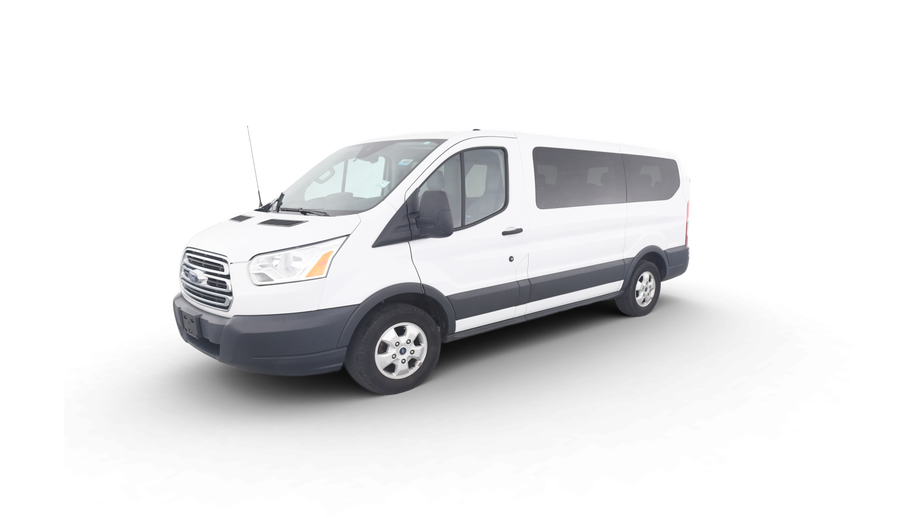
The most important change for the 2017 Ford Transit 150 is standard side-wind stabilization, which helps keep the van steady in strong crosswinds. This is a light update rather than a redesign, with a revised front console and expanded front-seat equipment but no major layout or engine changes.
About the 2017 Ford Transit 150
First North American Transit generation (launched for 2015), third model year, before the later full redesign.
Ford positions the Transit 150 as a flexible full-size van that can serve as a cargo hauler, people mover, or upfit starting point. The core appeal is variety: multiple roof heights, wheelbases, and door layouts, plus easier driving manners than old-school truck-based vans. In Transit 150 form, the focus is on maneuverability, broad visibility, and practical packaging for city deliveries, shuttle work, service trades, and group transport rather than maximum heavy-duty capability.
The 2017 Transit 150 spans work-focused cargo vans and XL or XLT passenger wagons, with low- and medium-roof bodies and several side-door layouts. Medium-roof cargo versions provide a 72-inch cargo height and as much as 357.1 cubic feet of space, while XLT passenger wagons add cloth seats, carpeted floors, cruise control, rain-sensing wipers, and automatic headlights.
What changed, by category
Safety
Side-wind stabilization became standard across the Transit 150 lineup. It works with the stability-control system to help the van remain steady in strong crosswinds.
Styling
Ford redesigned the walk-through center console to make movement between the front seats easier and provide more room for work equipment.
Tech
Some 2017 configurations have heated front seats and 10-way power front seats, an expansion from the prior year.
2017 Ford Transit 150 specs and features by trim
| Feature | ||||||||||||||
|---|---|---|---|---|---|---|---|---|---|---|---|---|---|---|
| Engine | V6, Flex Fuel, 3.7 Liter / V6, EcoBoost, Twin Turbo, 3.5 Liter | V6, Flex Fuel, 3.7 Liter / V6, EcoBoost, 3.5T / 5-Cyl, Diesel, 3.2 Liter | V6, Flex Fuel, 3.7 Liter / V6, EcoBoost, 3.5T / 5-Cyl, Diesel, 3.2 Liter | V6, Flex Fuel, 3.7 Liter / V6, EcoBoost, Twin Turbo, 3.5 Liter | V6, Flex Fuel, 3.7 Liter / V6, EcoBoost, TT, 3.5L | V6, Flex Fuel, 3.7 Liter / V6, EcoBoost, 3.5T / 5-Cyl, Diesel, 3.2 Liter | V6, Flex Fuel, 3.7 Liter / V6, EcoBoost, 3.5T / 5-Cyl, Diesel, 3.2 Liter | V6, Flex Fuel, 3.7 Liter / V6, EcoBoost, Twin Turbo, 3.5 Liter | V6, Flex Fuel, 3.7 Liter / V6, EcoBoost, TT, 3.5L | V6, Flex Fuel, 3.7 Liter / V6, EcoBoost, 3.5T / 5-Cyl, Diesel, 3.2 Liter | V6, Flex Fuel, 3.7 Liter / V6, EcoBoost, 3.5T / 5-Cyl, Diesel, 3.2 Liter | V6, Flex Fuel, 3.7 Liter / V6, EcoBoost, Twin Turbo, 3.5 Liter | V6, Flex Fuel, 3.7 Liter / V6, EcoBoost, 3.5T / 5-Cyl, Diesel, 3.2 Liter | V6, Flex Fuel, 3.7 Liter / V6, EcoBoost, 3.5T / 5-Cyl, Diesel, 3.2 Liter |
| Transmission | Auto, 6-Spd OD SelShft | Auto, 6-Spd w/OD SelShft | Auto, 6-Spd w/OD SelShft | Auto, 6-Spd OD SelShft | Auto, 6-Spd OD SelShft | Auto, 6-Spd w/OD SelShft | Auto, 6-Spd w/OD SelShft | Auto, 6-Spd OD SelShft | Auto, 6-Spd OD SelShft | Auto, 6-Spd w/OD SelShft | Auto, 6-Spd w/OD SelShft | Auto, 6-Spd OD SelShft | Auto, 6-Spd w/OD SelShft | Auto, 6-Spd w/OD SelShft |
| Drivetrain | RWD | RWD | RWD | RWD | RWD | RWD | RWD | RWD | RWD | RWD | RWD | RWD | RWD | RWD |
| Fuel Type | Flexible Fuel / Gas | Flexible Fuel / Gas / Diesel | Flexible Fuel / Gas / Diesel | Flexible Fuel / Gas | Flexible Fuel / Gas | Flexible Fuel / Gas / Diesel | Flexible Fuel / Gas / Diesel | Flexible Fuel / Gas | Flexible Fuel / Gas | Flexible Fuel / Gas / Diesel | Flexible Fuel / Gas / Diesel | Flexible Fuel / Gas | Flexible Fuel / Gas / Diesel | Flexible Fuel / Gas / Diesel |
| MPG City | 14–15 mpg | 14–15 mpg | 14–15 mpg | 14–15 mpg | 14–15 mpg | 14–15 mpg | ||||||||
| MPG Highway | 18–19 mpg | 18–19 mpg | 18–19 mpg | 18–19 mpg | 18–19 mpg | 18–19 mpg | ||||||||
| Horsepower | 275–310 hp | 185–310 hp | 185–310 hp | 275–310 hp | 275–310 hp | 185–310 hp | 185–310 hp | 275–310 hp | 275–310 hp | 185–310 hp | 185–310 hp | 275–310 hp | 185–310 hp | 185–310 hp |
| Torque | 260–400 lb-ft | 260–400 lb-ft | 260–400 lb-ft | 260–400 lb-ft | 260–400 lb-ft | 260–400 lb-ft | 260–400 lb-ft | 260–400 lb-ft | 260–400 lb-ft | 260–400 lb-ft | 260–400 lb-ft | 260–400 lb-ft | 260–400 lb-ft | 260–400 lb-ft |
| Max Towing | 5100 lb | 7500 lb | 7500 lb | 5100 lb | 5100 lb | 7500 lb | 7500 lb | 5100 lb | 5100 lb | 7500 lb | 7500 lb | 5100 lb | 7500 lb | 7500 lb |
| Trunk/Cargo | 224.5 cu-ft | 277.7 cu-ft | 246.7 cu-ft | 224.5 cu-ft | 224.5 cu-ft | 277.7 cu-ft | 246.7 cu-ft | 224.5 cu-ft | 292.7 cu-ft | 357.1 cu-ft | 315.2 cu-ft | 292.7 cu-ft | 357.1 cu-ft | 315.2 cu-ft |
| Rear Legroom | 35.6 in | 35.6 in | 35.6 in | 35.6 in | 35.6 in | 35.6 in | ||||||||
| Seats | 10 | 2 | 2 | 10 | 10 | 2 | 2 | 10 | 10 | 2 | 2 | 10 | 2 | 2 |
| Doors | 3 | 3 | 3 | 3 | 3 | 3 | 3 | 3 | 3 | 3 | 3 | 3 | 4 | 4 |
| Alarm System | ||||||||||||||
| Automatic Headlights | ||||||||||||||
| Cruise Control | ||||||||||||||
| Lane Departure Warning | ||||||||||||||
| Rain Sensing Windshield Wipers | ||||||||||||||
| Rear View Camera | ||||||||||||||
| Alloy Wheels | ||||||||||||||
| Power Side Steps | ||||||||||||||
| Privacy Glass | ||||||||||||||
| Side Steps | ||||||||||||||
| Navigation System | ||||||||||||||
| Smartphone Interface | ||||||||||||||
| Dual Power Front Seats | ||||||||||||||
| Folding Rear Seat | ||||||||||||||
| Rear Air Conditioning | ||||||||||||||
| Heated Front Seats | ||||||||||||||
| Leather Seats | ||||||||||||||
| Power Driver Seat | ||||||||||||||
| Remote Start | ||||||||||||||
| Third Row Seat | ||||||||||||||
Frequently asked questions
What is the biggest change to the 2017 Ford Transit 150?
The biggest change is standard side-wind stabilization across the lineup. It helps the van stay steadier when strong crosswinds push against its tall body.
Is the 2017 Ford Transit 150 redesigned?
No, the 2017 Transit 150 is not redesigned. It remains part of the first North American Transit generation introduced for 2015 and receives a light safety and cabin update.
Is the 2017 Ford Transit 150 meaningfully different from the 2016 model?
Yes, but the differences are modest. The 2017 model adds standard side-wind stabilization, a redesigned walk-through front console, and broader use of heated and 10-way power front seats, while the basic bodies and engines remain largely unchanged.
Did the 2017 Ford Transit 150 get new engines?
No, the engine choices stayed largely the same for 2017. The year’s main updates concern crosswind stability, front-cabin usability, and seat equipment rather than powertrain changes.
Does every 2017 Ford Transit 150 have side-wind stabilization?
Yes, side-wind stabilization is standard across the 2017 Transit 150 lineup, including its cargo-van and passenger-wagon configurations.
2017 Ford Transit 150 Reviews
What owners are saying about the 2017 Ford Transit 150.
3.9
2017 Ford Transit 150
(36 reviews)
“Vehicle is perfect for the purposes we purchased it. We use it for everyday trips and travel with a stroke victim.”
“Gas mileage is horrible in this day and age, other companies are doing much better but the government does not require averages on work vehicles ???????”