
2010 Chevrolet Traverse: What's New, Specs & Features
Last updated August 4, 2026
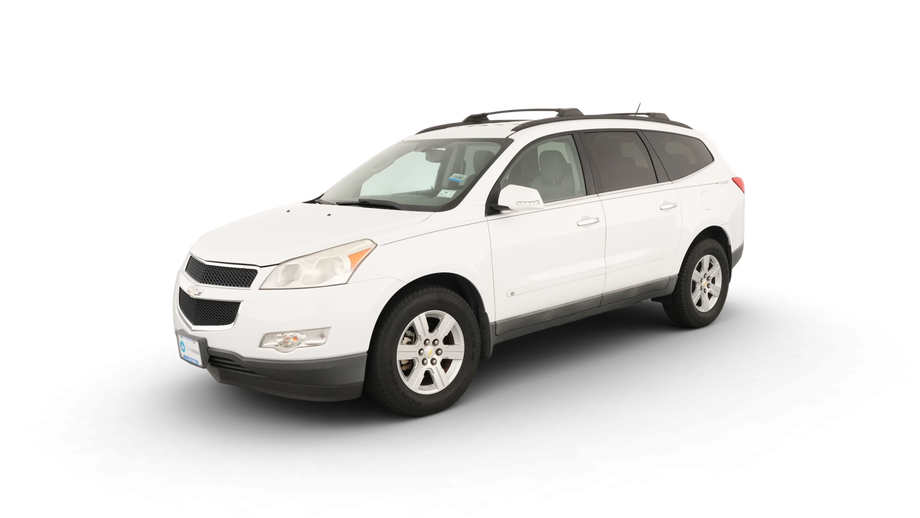
The 2010 Chevrolet Traverse is a light-update year, not a redesign. The main change is revised LTZ equipment: remote start became standard, while navigation was no longer standard.
About the 2010 Chevrolet Traverse
1st generation (2009-2012 pre-refresh), second model year.
Chevrolet positioned the Traverse as a family-first three-row crossover for shoppers who wanted minivan-like room without buying a minivan. The big selling points were adult-friendly space in all three rows, strong cargo flexibility, eight-passenger capacity on most trims, and a smoother, more car-like driving feel than truck-based SUVs. In Chevrolet’s lineup, it was the practical long-trip and daily-family-hauler choice, with strong safety credentials and useful room at the center of the pitch.
The 2010 Traverse ranges from the practical eight-seat LS to the more polished LT and comfort-focused LTZ. The LT adds features such as rear parking sensors and a power driver’s seat, while the LTZ has a 288-hp V6, leather seating, heated and cooled front seats, and a power liftgate.
What changed, by category
2010 Chevrolet Traverse specs and features by trim
| Feature | |||
|---|---|---|---|
| Engine | V6, 3.6 Liter | V6, 3.6 Liter | V6, 3.6 Liter |
| Transmission | Automatic, 6-Spd w/Overdrive & Shift Control | Automatic, 6-Spd w/Overdrive & Shift Control | Automatic, 6-Spd w/Overdrive & Shift Control |
| Drivetrain | 2WD | 2WD | AWD |
| Fuel Type | Gas | Gas | Gas |
| MPG City | 17 mpg | 17 mpg | 17 mpg |
| MPG Highway | 24 mpg | 24 mpg | 24 mpg |
| Horsepower | 281 hp | 281 hp | 288 hp |
| Torque | 266 lb-ft | 266 lb-ft | 270 lb-ft |
| Max Towing | 5200 lb | 5200 lb | 5200 lb |
| Trunk/Cargo | 116.4 cu-ft | 116.4 cu-ft | 116.4 cu-ft |
| Rear Legroom | 33.2 in | 33.2 in | 33.2 in |
| Seats | 8 | 8 | 7 |
| Doors | 4 | 4 | 4 |
| Rear Parking Sensors | |||
| Rear View Camera | |||
| Alloy Wheels | |||
| Heated Mirrors | |||
| Memory Exterior Mirrors | |||
| Panorama Moon Roof | |||
| Power Folding Exterior Mirrors | |||
| Power Liftgate/Trunk Release | |||
| Rear Spoiler | |||
| Roof Rails | |||
| Side Steps | |||
| Bluetooth | |||
| Navigation System | |||
| Premium Audio | |||
| Rear DVD Entertainment System | |||
| Satellite Radio | |||
| USB Ports | |||
| 115V Power Outlet | |||
| Auto-Dimming Interior Mirror | |||
| Cooled Seats | |||
| Dual Power Front Seats | |||
| Heated Front Seats | |||
| Integrated Garage Door Opener | |||
| Leather Seats | |||
| Leather-Wrapped Steering Wheel | |||
| Memory Driver's Seat | |||
| Power Driver Seat | |||
| Remote Start | |||
| Third Row Seat | |||
| Tri-Zone Automatic Air Conditioning | |||
Frequently asked questions
What changed from the 2009 Traverse to the 2010 Traverse?
The 2010 Traverse mainly received equipment-packaging changes. Remote start became standard on LTZ, navigation was no longer standard on LTZ, and roof rails were no longer standard across the lineup; the basic design and powertrains carried over.
Was the 2010 Chevrolet Traverse redesigned?
No, the 2010 Chevrolet Traverse was not redesigned. It remained part of the first generation introduced for 2009, with the same body, trim structure, and basic mechanical layout.
Did the 2010 Chevrolet Traverse get a new engine or transmission?
No, the 2010 Traverse kept its 3.6-liter V6 and six-speed automatic transmission. LS and LT models have 281 horsepower, while the LTZ has a 288-horsepower version.
How do the 2010 Traverse LS, LT, and LTZ differ?
The 2010 LS is the basic eight-seat model, the LT adds convenience features such as rear parking sensors and a power driver’s seat, and the LTZ emphasizes comfort with leather, heated and cooled front seats, a power liftgate, and the stronger 288-hp V6.
Is the 2010 Traverse a major upgrade over the 2009 model?
No, the 2010 Traverse is very similar to the 2009 model. Its differences are mostly equipment packaging, so shoppers should compare the features on individual vehicles rather than expect a newer design or major mechanical update.